
Learn More About...


Who are Fawns?
We're the longest-established school playground equipment provider around - we know a thing or two about playground design.
With family-ran roots, schools, MATs, nurseries and parish councils trust us to create outdoor playgrounds with a purpose.
Using Your Playground as Evidence During an Ofsted Inspection
Ofsted inspections continue to focus on a simple but important question: what do leaders’ decisions mean for pupils’ day-to-day experiences?
A well-designed playground can provide valuable evidence during an Ofsted inspection, demonstrating how leaders support physical activity, inclusion, wellbeing, behaviour and personal development.
In this blog, we explore why playgrounds matter during inspections and how your outdoor provision can provide valuable evidence of curriculum intent, inclusion, wellbeing and leadership decisions.
Why playgrounds matter for Ofsted in 2026
Under Ofsted’s current inspection framework, inspectors are required to understand each school in its own context. Focusing on the impact of leaders’ decisions on pupils’ experiences and outcomes.
A key principle of the current inspection approach is understanding how well pupils:
- Achieve in terms of academic progress, social development and wider personal growth.
- Belong to the school community so that they attend, behave and build positive relationships.
- Thrive because adults understand them as individuals, and systems keep them safe and supported.
All three of these are heavily influenced by what happens outdoors. Your school playground is where pupils develop social skills, practise independence, and experience the culture you, as leaders, have created in a very visible way.
Your outdoor provision can help demonstrate:
- How your outdoor provision supports pupils’ development, learning, wellbeing and physical activity across different phases.
- How school-led before and after-school clubs add value for pupils. Rather than simply holding them until the official start of the school day.
- What you’re doing to boost physical activity levels and support mental health and wellbeing.
- How you’re meeting curriculum expectations for PE and physical development. From early years through to the end of secondary.
- What your strategic decisions and use of funding (including pupil premium and EYPP spending) mean for the pupils in their case sample.
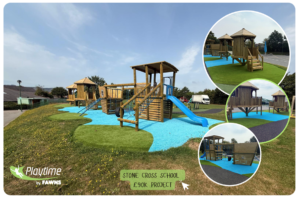
How to use your playground as evidence for Ofsted evaluation areas
Outdoor play does a lot of heavy lifting in most schools. It naturally supports regulation, social skill development, and gives opportunities to apply communication and language skills. The benefits of outdoor play aren’t always talked about using these terms.
Choosing your playground design with purpose helps pupils at all educational levels. From supporting physical development in the early years to providing purposeful opportunities for physical activity, outdoor learning and personal development across the school.
If all your school team know how you use your playground intentionally, they can confidently share with inspectors how it supports your curriculum, inclusion, and wider priorities.
How your playground supports your curriculum intent
The principle is simple: rich, varied play doesn’t “reward” learning, it builds the foundations that make learning possible.
This isn’t an exhaustive list, but it gives some great ideas of how your playground can evidence impactful curriculum choices during your Ofsted visit:
- Physical development is planned from EYFS to the end of Key Stage 4. With outdoor spaces used to rehearse and apply fundamental movement skills beyond PE lessons.
- PE lessons make deliberate use of MUGAs, courts, pitches, trim trails or health trek trails so pupils can experience team sport, fitness and skill development in appropriate spaces.
- Communication and language are supported outdoors through role-play, cooperative games, and problem-solving. Giving pupils frequent chances to hear, practise, and extend vocabulary, especially where intake language levels are low.
- Personal, social and emotional development is threaded through outdoor activity, supporting mental health, emotional regulation and social development as pupils tackle and succeed with physical and social challenges.
- Problem-solving and collaboration are built into outdoor play, with pupils expected to plan, negotiate rules, share resources, and take turns in ways that mirror the thinking skills needed in lessons.
- Cross-curricular and outdoor learning links are planned, using shelters, stages, trails, and activity panels to revisit and apply core subject knowledge through play and practical tasks.
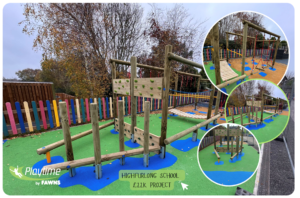
How your playground supports behaviour, attitudes and attendance
Under the current Ofsted framework, attendance and behaviour are evaluated together, with inspectors considering pupils’ attendance, behaviour and attitudes as part of the same evaluation area.
Your outdoor space, including breakfast and after-school provision, is a big part of that lived experience.
Here are some valuable ways your playground can evidence a strong behaviour and attendance culture:
- Outdoor areas are set up to support calm, structured routines at break, lunch and transition times, so the expectations you promote in classrooms are mirrored outside.
- Clear zoning, visible adults and simple rules reduce incident hotspots.
- Breakfast and after-school clubs make purposeful use of outdoor space for valuable activities and active play equipment rather than just holding pupils until the official start of the day.
- Pupils who previously struggled during social times now have predictable, structured options outdoors, and this is reflected in improved behaviour records or fewer incidents.
- Where appropriate, pupils with low or vulnerable attendance may have outdoor routines built into their support plans, with leaders able to explain how this forms part of a wider approach to improving attendance.
- Staff and pupil voice describe playtimes as fair, safe and enjoyable, with older pupils and leaders modelling the attitudes to learning and relationships you want to see back in the classroom.
How your playground can support Ofsted evaluation areas
Your playground is unlikely to provide evidence for every aspect of an Ofsted inspection, but it can give inspectors a useful insight into how some of your wider school priorities work in practice.
The current Ofsted framework evaluates different aspects of school provision, including safeguarding, inclusion, curriculum and teaching, achievement, attendance and behaviour, personal development and wellbeing, and leadership and governance. Where applicable, inspectors also evaluate early years and post-16 provision.
Your outdoor space can support evidence across several of these areas, particularly where leaders can explain why decisions have been made, how provision is used and what difference it makes to pupils:
- Inclusion – whether pupils with SEND, disadvantaged pupils and those with other barriers to learning or wellbeing can access and participate in outdoor activities alongside their peers.
- Curriculum and teaching – how outdoor spaces support physical development, PE, communication and language, outdoor learning and opportunities to apply knowledge and skills beyond the classroom.
- Attendance and behaviour – how the organisation of playtimes, social spaces and outdoor activities supports positive behaviour, relationships and pupils’ experience of school.
- Personal development and wellbeing – how pupils develop confidence, independence, resilience, social skills and an understanding of healthy, active lifestyles through outdoor experiences.
- Safeguarding – how leaders consider supervision, accessibility, equipment, boundaries, risk management and pupils’ safety when planning and using outdoor spaces.
- Leadership and governance – how investment in outdoor provision links to identified needs, school improvement priorities, pupil voice and the impact leaders want to achieve.
The important point is not simply having an attractive or well-equipped playground. Leaders should be able to explain the purpose behind their outdoor provision and how it contributes to pupils’ experiences and wider school priorities.
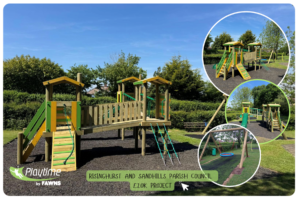
How your playground shows safeguarding and risk management in practice
Safeguarding in the current Ofsted framework is about culture as much as compliance. Inspectors assess how the school keeps pupils safe in everyday activities, at social times, and across all parts of the school.
Here are some ideas on how your outdoor space can evidence strong safeguarding and appropriate risk management:
- Sightlines, boundaries and routes are regularly reviewed and adjusted. So there are no “blind spots” where unsafe behaviour can easily go unnoticed.
- Risk assessments for outdoor areas balance safety with appropriate challenge, and leaders can explain specific changes they have made in response to incident patterns.
- Arrival, departure and handover routines in outdoor areas are organised and calm. Reducing the risk for pupils.
- Plans for pupils with medical, mobility or sensory needs include how they will be kept safe outdoors. As well as staff describing the adjustments or equipment that make this possible.
- Behaviour, accident and near-miss records from outdoor spaces are reviewed regularly, and the resulting tweaks to layout, supervision or routines can be clearly explained to inspectors as “we noticed this, so we did that”, rather than simply removing opportunities.
How your playground reflects leadership and governance decisions
Outdoor spaces say a lot about how leaders think about curriculum, inclusion, physical activity and community engagement.
Under the current framework, inspectors are interested in how well leadership decisions, governance oversight and community involvement translate into real experiences for pupils.
Here’s how your playground design can evidence strong leadership and governance:
- Senior leaders and governors can explain the chosen playground design or future plans. Linking them to priorities such as inclusion, behaviour, physical activity, early years development, or SEND.
- Decisions about outdoor investment are clearly linked to your school development plan. With the playground sitting alongside other curriculum, safeguarding and well-being actions.
- Governors understand how funding streams have been used to enhance outdoor provision, such as PE and sport premium, pupil premium, EYPP, SEND funding and capital or curriculum budgets.
- Parents, pupils and staff have been meaningfully involved in shaping the vision for the outdoor space.
- PTA fundraising and external grants have been directed towards clearly defined needs outdoors. And leaders can describe what has changed for pupils as a result of that community support.
- Leaders regularly review how outdoor spaces are working in practice, using behaviour data, pupil voice and staff feedback to make adjustments.
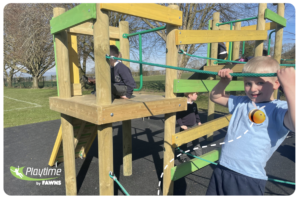
How to gather simple evidence from your playground
You do not need to create a separate “playground evidence file” simply for an inspection. Instead, make sure the evidence you already use to evaluate and improve your provision clearly shows how outdoor spaces support pupils.
The goal, then, is to make sure your existing evidence tells a clear story about how you use outdoor space.
You might want to use:
- Simple annotated site maps showing how different areas support PE, EYFS learning, inclusion, social spaces and quiet zones.
- Timetables and rotas for PE, outdoor learning, clubs and targeted groups, including breakfast and after-school provision that uses outdoor space.
- Pupil voice surveys or notes from school council, sports leaders or eco groups. About how they use and experience the playground.
- Behaviour and incident logs are used reflectively to show how changes to layout or routines have reduced issues.
- Participation records for extra-curricular clubs, outdoor SEND interventions or funded activities outdoors. Including for pupils supported through pupil premium and EYPP.
Questions school leaders may be asked about outdoor provision
During discussions, inspectors may ask leaders how outdoor spaces contribute to wider school priorities.
Schools may wish to consider:
- How does your playground support pupils with SEND?
- Does the current outdoor provision support behaviour and wellbeing?
- How is PE and Sport Premium funding reflected outdoors?
- What opportunities do pupils have for leadership and responsibility?
- Can pupils access outdoor learning beyond playtimes?
- What evidence shows your outdoor investment has had impact?
- Can pupils with SEND experience and access the outdoor environment?
- How have pupils’ views influenced decisions about outdoor provision?
- Do leaders know whether outdoor provision is meeting pupils’ needs?
How Fawns help schools design playgrounds that naturally generate evidence
A well-designed space doesn’t just keep children busy – it becomes part of how they achieve, belong and thrive.
With over 35 years of experience and more than 28,000 playgrounds installed, Fawns has extensive experience designing and delivering outdoor spaces for schools. The focus is always on purpose first, not products.
Whether you’re refreshing an existing playground or planning a completely new outdoor space, our team can help you develop a design around your pupils’ needs, school priorities and available budget.
Get in touch with Fawns to discuss your playground plans and arrange a free, no-obligation design consultation.
More articles you’ll like:
Playground ideas for primary schools: design ideas that solve real school challenges
Who are Fawns?
We're the longest-established school playground equipment provider around - we know a thing or two about playground design.
With family-ran roots, schools, MATs, nurseries and parish councils trust us to create outdoor playgrounds with a purpose.


Other Blog Posts




We are the one-stop-solution for outdoor playground equipment for schools and parks across the UK.
Based in Hampshire, we pride ourselves on delivering high-quality, durable and innovative school playgrounds.
Fawns Recreational Services Limited - Company Registration Number: 03863973
Site Links
Contact
- 01252 515 199
- sales@fawns.co.uk
- Beech House, Ancells Business Park, Fleet, Hampshire, GU51 2UN

© Playtime By Fawns | 2026 website developed & maintained by digidoda
This site is protected by reCAPTCHA and the Google Privacy Policy and Terms of Service apply.