Learn More About...


Who are Fawns?
We're the longest-established school playground equipment provider around - we know a thing or two about playground design.
With family-ran roots, schools, MATs, nurseries and parish councils trust us to create outdoor playgrounds with a purpose.
How to Choose the Best Trim Trail for Your Playground
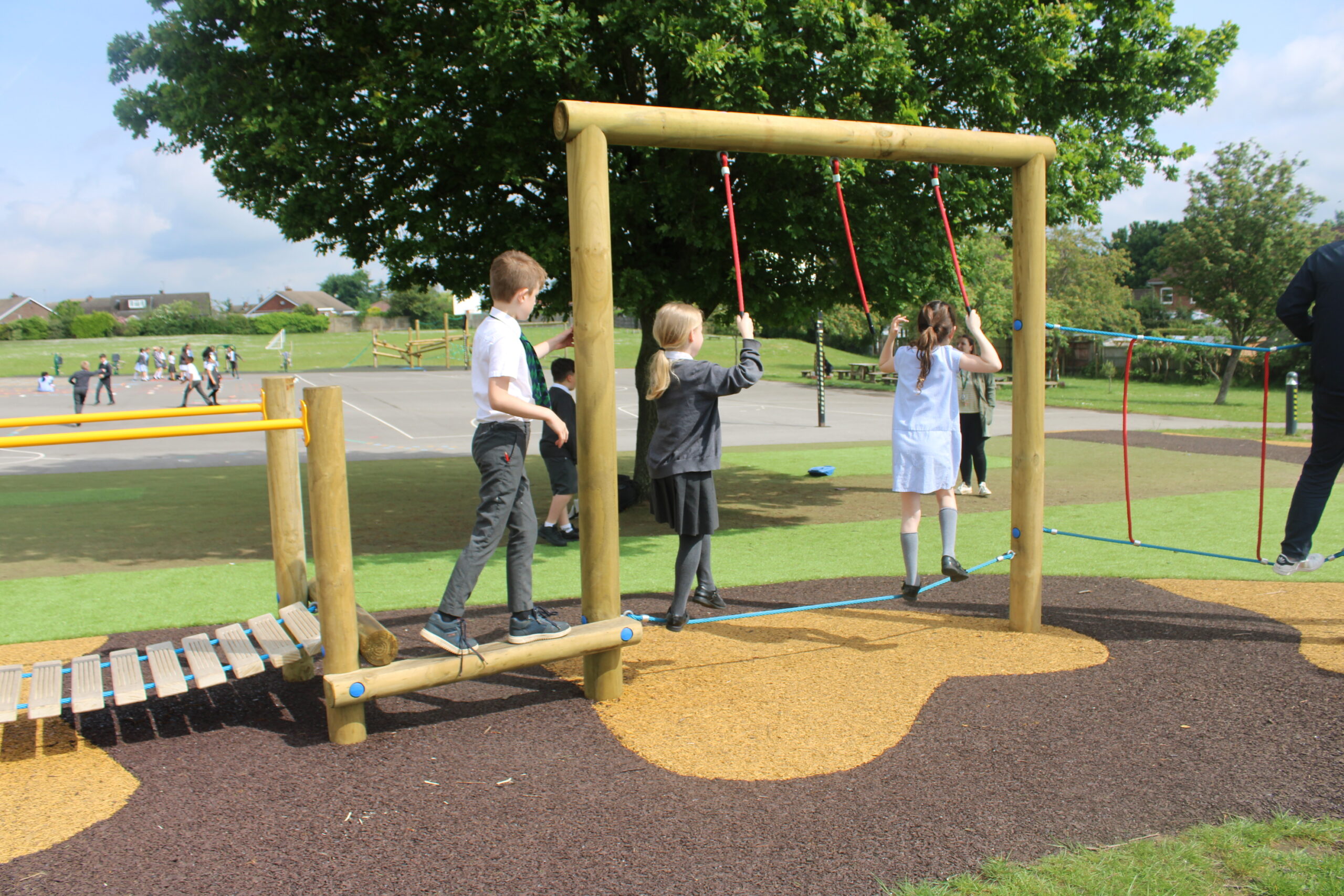
Trim trails are one of the most popular additions to playgrounds across the UK, and it’s easy to see why. But with so many styles of trim trail and components to choose from, knowing where to start isn’t always straightforward.
In this blog, we cover everything you need to make the right decision for your setting, whether you’re a school, a parish council, or a leisure venue looking to add sustainable value to your outdoor space.
What is a trim trail?
A trim trail is a series of linked outdoor play and exercise stations that children navigate as an obstacle course. Think balance beams, monkey bars, rope bridges, stepping logs and climbing nets, all connected into a flowing adventure trail.
Trim trails are sometimes called obstacle courses, fitness trails, or adventure trails, though you’ll hear trim trail and obstacle course used most widely in the UK.
Why is it called a trim trail?
The history of the trim trail originally began in the military. A trim trail was designed to keep soldiers physically fit, and ‘trim’, whilst helping them navigate the hazards they might encounter when planning an assault.
It’s why assault courses, obstacle courses and trim trails are so often used to describe the same piece of outdoor equipment.
Why are trim trails so popular?
A trim trail non-prescriptive, making it a perfect vehicle for development through play with no specific right way to enjoy it. That’s a big part of why trim trails for schools have become one of the most requested pieces of playground equipment in the UK.
On the physical side, trim trails build the all-important Fundamental Movement Skills (FMS) and they’re one of the few pieces of playground equipment that targets different muscle groups and physical challenges.
Beyond the physical, trim trails support a range of developmental outcomes that leaders in education, local councils and commercial settings all value:
- Problem-solving and decision-making as children figure out how to navigate each obstacle
- Confidence and resilience as they take on challenges
- Social skills through turn-taking, teamwork and communicating with others
- Sensory development, particularly valuable for engaging SEND children with play and those who benefit from emotional regulation opportunities
The flexibility of a trim trail
With inclusive play at the heart of every playground design, our designers ensure trim trails have a mixture of components that work well for sensory circuit regulation, with easy join and exit opportunities throughout.
Trim trails can run in a straight line, more like a traditional obstacle course. Or they can be designed to fit awkward spaces, making the most of unloved areas like sloping hills or uneven terrain.
Types of trim trails
Not all trim trails are the same, and the differences matter when you’re choosing one for your setting, children and budget. Here’s a quick overview of what’s available.
EYFS and mini trim trails
Designed for the youngest children, EYFS mini trim trails are low to the ground and focus on balance and coordination challenges. Short balance beams, simple stepping elements and basic climbing features are the bread and butter of an early year’s trail.
Ideal for nurseries, reception classes and early years outdoor spaces where building confidence through physical development is the main goal.
For settings where EYFS outdoor space has many uses, moveable trim trails offer even more flexibility.
Build-your-own trim trail
You can choose a trim trail that’s already been designed, like the Madagascar Trim Trail pictured below, or mix and match components to build your own.
One of the real advantages of modular trim trail equipment is the ability to add components over time. Making it a practical, long-term play investment that grows with your setting.
Low level trim trails
Low level trim trails have a free fall height of 0.6 metres or less, making them a practical and popular choice across a variety of settings.
The lower height means they can often be installed directly onto well maintained grass without additional safety surfacing, which can keep the overall project cost down.
They still offer real physical challenge through balance, crossing and traversing elements, just at a height that’s preferred for younger children.
High level trim trails
High level trim trails bring more challenge for children ready to push themselves physically.
Monkey bars, elevated rope crossings, scramble nets and A-frame climbers all feature across these ranges, designed to build upper body and core strength.
They’re popular trim trails for schools at KS2 and above, as well as community and youth clubs and parish councils looking to include all ages in their playground plans.
Fitness trails and obstacle courses
Some settings want a trim trail that leans further into its physical challenge roots, and fitness trails and obstacle courses are built to deliver exactly that.
Hurdles, pull-up bars, parallel bars and rope climbs are laid out in a structured sequence that tests the whole body. Installing two identical trails side by side creates a ready-made race obstacle course.
Some even come with a built-in stopwatch feature, which makes timed challenges a natural fit for secondary school PE lessons.
Schools with a strong PE focus, cadet groups, outdoor activity centres and community facilities all tend to favour this style.
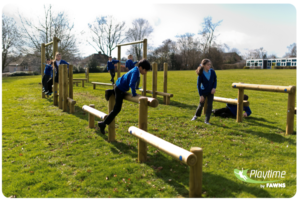
Sports Fitness Trails like the Barcelona Sports Challenge pictured below are built with exactly this in mind, combining the classic elements of an obstacle course with the accessibility and safety of a well-designed playground trail.
Planning the best trim trail fit
Getting the right trim trail for your setting comes down to a handful of key decisions. Working through them early means your finished trail delivers exactly what your playground needs.
What are your goals?
- Are you trying to increase physical activity levels across the school day?
- Improve provision for pupils with SEND needs?
- Add to your outdoor learning offer?
- Challenge your more active KS2 children who have outgrown the current playground?
- Encourage your local community to stay and play locally?
Being clear about your goals helps you choose the right components and the right level of challenge. Rather than investing in playground equipment that won’t prove sustainable in the long run.
Who is going to use it?
The age range and ability levels of your users will determine everything from the height of the equipment to the components that’ll get used day to day.
A trail designed for reception children will look very different from one built for a KS2 playground. Therefore a trail that needs to serve both combines a thoughtful mix of challenge levels.
What space do you have?
Trim trails can weave around existing equipment, fit into awkward corners, follow the boundary of a field or stretch across a large open space. What matters is that the design works with your space.
Think about playground flooring type, as grass tiles, Durabond and Wetpour are all commonly paired with trim trails.
When our playground consultant visits at the start of your enquiry, they’ll consider supervision sightlines and everything else that matters for safety and visibility.
What is your budget?
Trim trails can be tailor-made to fit your playground budget. So choosing a trail that doesn’t require additional surfacing is a point worth considering.
Our sales team work with large and smaller budgets, designing a complete project with no hidden surprises.
Safety first
All trim trails you look at should fully comply with BS EN 1176, the British and European safety standard for playground equipment. With safety surfacing meeting BS EN 1177.
At Fawns, safety is one of our core values, we ensure compliance to safety standards is a minimum expectation.
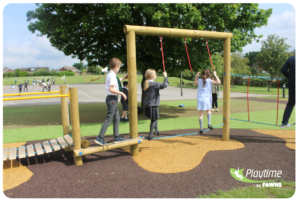
You can install low-level equipment on well-maintained grass without needing additional surfacing, as it may already meet requirements. For equipment with a higher free-fall height, we typically pair it with impact-absorbing surfaces to ensure safety and compliance.
Make sure whichever playground supplier you choose can demonstrate full compliance and is transparent about surfacing you will require.
Working with the right supplier
Choosing the right trim trail matters, but so does choosing who designs, manufactures and installs it.
A good play equipment supplier won’t just point you at a brochure. They’ll come to your site, understand your space and design something that works for you.
At Fawns, we’ve been designing and installing trim trails for schools, parish councils and leisure venues across the UK for over 35 years. We’re proud to be known as the best in our field, trusted by leaders and decision-makers to improve playground spaces.
Our full trim trail range covers everything from freestanding EYFS trails through to high level adventure courses. Every project starts with a free design consultation and 3D visualisation so you can see exactly what you’re getting.
We build our wooden play equipment in the UK and plan every project to keep disruption to a minimum.
We have plenty of recently completed trim trail projects for you to explore, and you can hear from our Playtime by Fawns customers too.
Get in touch with our friendly team for a free design consultation and start building your ideal trim trail.

More articles you’ll like:
5 ways to improve SEND provision in mainstream schools
Who are Fawns?
We're the longest-established school playground equipment provider around - we know a thing or two about playground design.
With family-ran roots, schools, MATs, nurseries and parish councils trust us to create outdoor playgrounds with a purpose.


Other Blog Posts




We are the one-stop-solution for outdoor playground equipment for schools and parks across the UK.
Based in Hampshire, we pride ourselves on delivering high-quality, durable and innovative school playgrounds.
Fawns Recreational Services Limited - Company Registration Number: 03863973
Site Links
Contact
- 01252 515 199
- sales@fawns.co.uk
- Beech House, Ancells Business Park, Fleet, Hampshire, GU51 2UN

© Playtime By Fawns | 2026 website developed & maintained by digidoda
This site is protected by reCAPTCHA and the Google Privacy Policy and Terms of Service apply.