Learn More About...


Who are Fawns?
We're the longest-established school playground equipment provider around - we know a thing or two about playground design.
With family-ran roots, schools, MATs, nurseries and parish councils trust us to create outdoor playgrounds with a purpose.
How Outdoor Play Supports Children’s Wellbeing
Outdoor play is an important part of childhood. Whether children are playing in a school playground, exploring a local park, spending time in the garden or taking part in outdoor learning, being outside gives them opportunities to move, explore, socialise and make their own choices.
A well-planned outdoor space can support different aspects of children’s wellbeing by giving them opportunities to be active, spend time with friends, develop independence, manage their emotions and find activities that suit their individual needs.
Creating more opportunities for regular outdoor play can form an important part of a healthy and supportive school environment.
How does outdoor play support children’s wellbeing at school?
Wellbeing is influenced by many different factors, including physical health, emotional health, relationships, confidence and a sense of belonging. Outdoor play can bring many of these areas together naturally.
A child using a playground might be climbing, balancing or running while also talking to friends, solving a problem, deciding which activity to try or creating their own game. This is one of the reasons outdoor play is so valuable. It does not always need to be structured or adult led. Giving children time, space and appropriate opportunities to play allows them to make choices and develop at their own pace.

Why outdoor play matters for children’s wellbeing
For schools, the playground is much more than a space between lessons. It can be a place where children make choices, spend time with friends, challenge themselves, find a quieter moment, explore their surroundings and develop confidence.
This is why outdoor play, and wellbeing should be considered together when planning a school outdoor space. The most successful playgrounds provide variety. They offer opportunities for active play, social interaction, imaginative play, sensory experiences, challenge and quiet time.
By considering these different needs, schools can create outdoor environments where more children can find ways to play that are enjoyable, meaningful and appropriate for them.
Creating opportunities for movement and activity
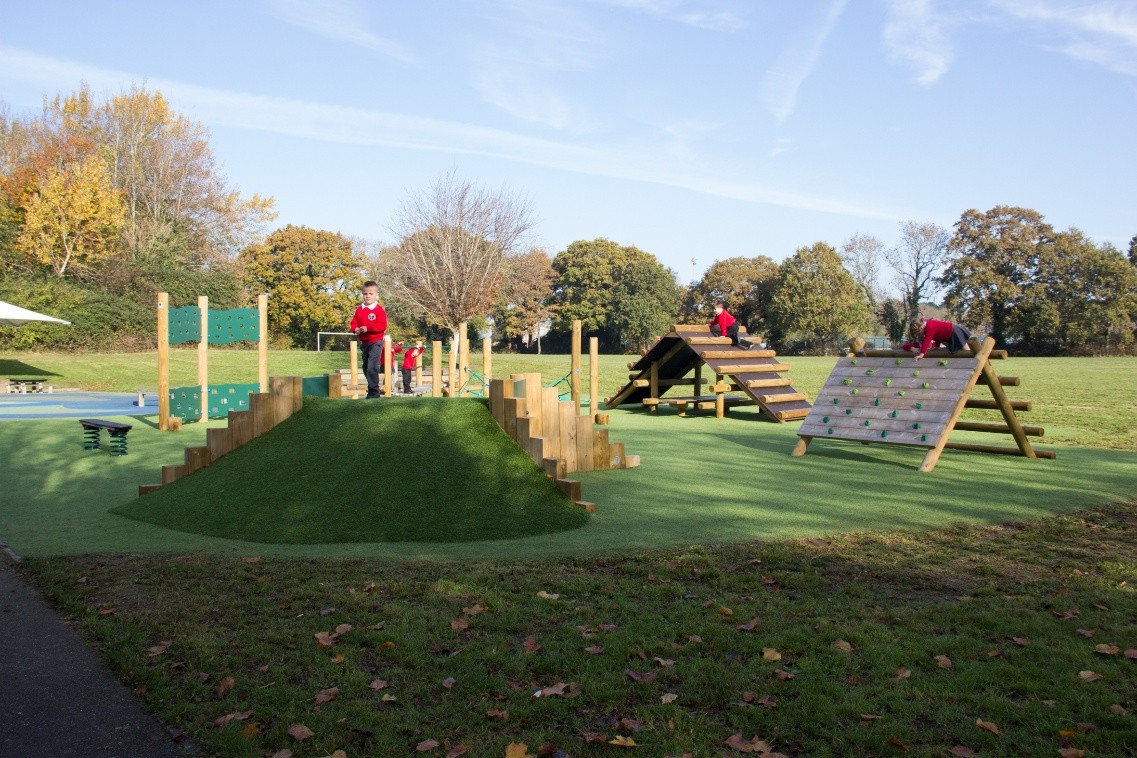
Outdoor spaces can provide children with more opportunities to move throughout the school day. Running, climbing, balancing, jumping and navigating different play challenges can all encourage children to be physically active while developing important movement skills.
However, different children will enjoy different types of movement. Some may love climbing and challenging themselves on a trim trail, while others may prefer walking, playing imaginative games or taking part in activities at their own pace. Providing a mixture of play opportunities means children can find ways to be active that are enjoyable and achievable for them.

Giving children choice and independence
One of the most valuable aspects of outdoor play is the freedom it can provide. During unstructured play, children can often choose what they want to do, who they want to play with and how they want to use the space around them.
They might decide to try a new piece of equipment, create a game with their friends or find somewhere quieter to spend their break. These everyday decisions can help children develop independence and confidence.
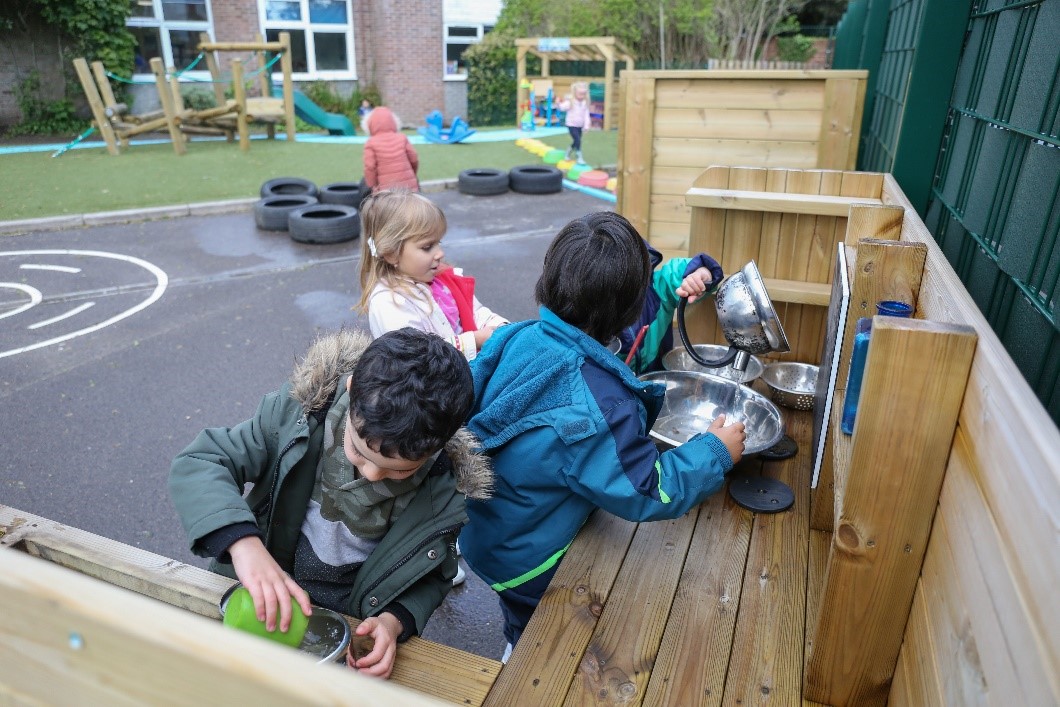
Playgrounds can support this by providing a variety of opportunities rather than directing every child towards the same activity. Open-ended equipment such as Dens & Playhouses, Physical Development Blocks and Mud Kitchens create flexible spaces that allow children to decide how they want to play.
Supporting emotional regulation
Children do not all arrive at playtime feeling the same way. Some may be excited and full of energy, while others may feel tired, overwhelmed or simply need some time away from the classroom. Outdoor play can provide a valuable change of environment and give children opportunities to choose activities that suit how they are feeling.
Active play may provide an opportunity for some children to move and release energy, while quieter areas can give others somewhere to sit, talk, read or spend some time away from a busy playground.
This is why considering different types of spaces is important when designing an outdoor area. A playground does not need to be entirely focused on high-energy activities to be successful. Creating a balance between active, social, imaginative and quieter areas can give children greater choice during their breaks.
Creating spaces for social and quiet play 
Playgrounds are important social spaces. Children can spend time with friends, create their own games and develop communication and cooperation skills through everyday play. However, social interaction does not look the same for every child.
Some children may enjoy busy group games, while others may prefer playing with one or two friends or spending some time independently. A varied outdoor space can accommodate these different preferences.
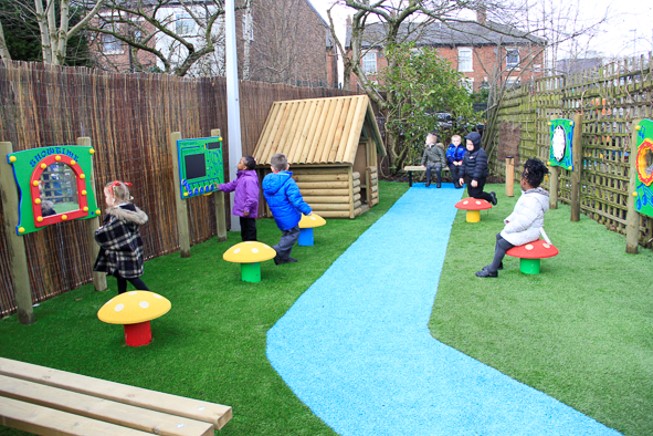
Seating areas, reading spaces and quieter zones can sit alongside climbing equipment, role play areas and active play features. This creates a playground with different environments rather than one large space where every activity takes place together.
The result can be a more welcoming outdoor space where children have greater choice about how they spend their time.
Supporting sensory needs and inclusion
Children experience outdoor spaces in different ways. Busy playgrounds can be exciting for some children but overwhelming for others. Similarly, some children may seek additional movement or sensory experiences as part of their play.
Inclusive playground design should consider these differences from the beginning.
Schools can consider incorporating:
- Accessible routes and surfacing
- Sensory play opportunities
- Quieter areas
- Inclusive seating
- Different levels of physical challenge
- Equipment that can be used in different ways
- Spaces for social and imaginative play
- Clear pathways and zones
The aim is not to create separate spaces for different groups of children. Instead, thoughtful design can provide a variety of opportunities so children with different abilities and needs can participate alongside their peers. This can be particularly important when schools are considering how their outdoor provision supports children with SEND.
Connecting children with nature
Outdoor play does not have to involve playground equipment. Natural environments can provide children with opportunities to explore, investigate and experience different sights, sounds and textures.
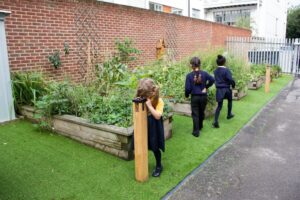
Schools can incorporate nature into their outdoor provision through planting areas, sensory gardens, outdoor learning spaces and natural features. Children can take part in gardening, observing wildlife, investigating the weather or simply spending time in a green environment.
Combining natural features with traditional playground equipment can create a more varied outdoor environment that supports exploration and discovery as well as physical play.
Building confidence through appropriate challenge
Outdoor play can also provide children with opportunities to challenge themselves. Climbing, balancing and navigating obstacles can encourage children to test their abilities and work out what they can achieve.
Successfully completing a challenge that initially seemed difficult can provide a great sense of achievement and help children develop confidence.
The key is providing appropriate challenge rather than unnecessary risk. Playground design should take children’s ages, abilities and developmental needs into account, offering different levels of challenge so children can choose activities that are appropriate for them.
How can schools design a playground that supports wellbeing?
If a school wants to use outdoor play to support children’s wellbeing, it is worth looking at the playground as a whole rather than focusing only on individual pieces of equipment.
Consider asking:
- Does the playground provide opportunities for different types of play?
- Are there areas for both active and quieter activities?
- Can children choose how they spend their break?
- Are there opportunities for imaginative and creative play?
- Can children with different abilities participate?
- Are there appropriate challenges for different ages?
- Are there spaces where children can socialise?
- Are there quieter areas for children who need time away from busy play?
- Could natural features or outdoor learning be incorporated?
- Have children been given an opportunity to share their ideas?
These questions can help schools identify what is already working and where improvements could make the biggest difference.

Small changes can make a big difference
Supporting outdoor play and wellbeing does not always mean completely replacing a playground. There may be opportunities to improve an existing space by adding new play features, Seating, Playground Markings, Activity Panels, Sensory Equipment, Planters or quieter areas.
For schools planning a larger project, it is important to consider the wider environment. Equipment, surfacing, pathways, accessibility, planting and different play zones all influence how children use the space. A playground should be designed around the children who will use it, rather than simply filling an available area with equipment.
Making outdoor play part of the school day
The benefits of a well-designed outdoor space do not need to be limited to break and lunchtime.
Outdoor areas can also support learning, creativity and opportunities for children to spend time outside during different parts of the school day. Outdoor classrooms, reading areas, role play spaces and activity zones can help schools make greater use of their outdoor environment.
This can help create a space that supports children’s needs in different ways, rather than being used solely as a place for physical activity.

How can Playtime by Fawns help?
At Playtime by Fawns, we believe outdoor spaces should be designed with a purpose. With more than 35 years of experience and over 28,000 playgrounds installed, our team works with schools to create outdoor spaces that support active play, learning, inclusion and children’s wellbeing.
We can help you consider everything from playground equipment and surfacing to accessibility, quiet areas, sensory play, imaginative play and outdoor learning.
If you’re considering improvements to your outdoor space, get in touch with our team to discuss your ideas and arrange a free, no-obligation design consultation.
What to read next
7 Benefits of Outdoor Play for Children
7 Ways to Improve Pupil Mental Health Through Physical Activity
How Does Play Support Social Development?
Who are Fawns?
We're the longest-established school playground equipment provider around - we know a thing or two about playground design.
With family-ran roots, schools, MATs, nurseries and parish councils trust us to create outdoor playgrounds with a purpose.


Other Blog Posts



We are the one-stop-solution for outdoor playground equipment for schools and parks across the UK.
Based in Hampshire, we pride ourselves on delivering high-quality, durable and innovative school playgrounds.
Fawns Recreational Services Limited - Company Registration Number: 03863973
Site Links
Contact
- 01252 515 199
- sales@fawns.co.uk
- Beech House, Ancells Business Park, Fleet, Hampshire, GU51 2UN

© Playtime By Fawns | 2026 website developed & maintained by digidoda
This site is protected by reCAPTCHA and the Google Privacy Policy and Terms of Service apply.