
Learn More About...


Who are Fawns?
We're the longest-established school playground equipment provider around - we know a thing or two about playground design.
With family-ran roots, schools, MATs, nurseries and parish councils trust us to create outdoor playgrounds with a purpose.
School-Based Nursery (SBN) Capital Grant Phase 3: What Schools Need to Know
Updated September 2026: This article has been updated to reflect Phase 3 of the School-Based Nursery Capital Grant, covering 2027 to 2030. Phase 2 applications have now closed. Phase 3 is the current stage of the programme and covers 2027–2030.
Unlike Phase 2, Phase 3 is led by local authorities. Schools interested in creating or expanding school-based nursery provision should speak to their local authority about potential projects and local priorities.
The School-Based Nursery Capital Grant is continuing into its third phase, providing capital funding to support the creation and expansion of school-based nursery provision across England.
Phase 3 covers 2027 to 2030 and is designed to help local authorities increase access to early years provision, particularly in areas where there is a clear need for additional childcare places and where children and families may face greater disadvantage.
Unlike previous phases, schools do not apply directly for Phase 3 funding. Instead, local authorities are responsible for developing and submitting multi-year funding proposals to the Department for Education (DfE), working with schools, academy trusts, maintained nursery schools, Best Start Family Hub partners and other relevant organisations.
For schools considering creating or expanding early years provision, understanding how Phase 3 works can help you prepare for discussions with your local authority and develop a clear proposal.

What is the School-Based Nursery Capital Grant Phase 3?
The School-Based Nursery Capital Grant Phase 3 is a capital funding programme running from 2027 to 2030.
It builds on the first two phases of the School-Based Nursery programme and aims to increase the number of early years places available by supporting local authorities to create or expand school-based nursery provision.
Phase 3 has a particular focus on supporting provision in areas where there is local need, including areas of disadvantage.
The programme can support projects that create new nursery provision or expand existing provision, provided the project meets the DfE’s eligibility requirements and results in a net increase in childcare places.
What has changed in Phase 3?
One of the biggest changes from the earlier phases is the way funding is allocated.
Phase 3 is led by local authorities
Schools and early years providers cannot apply directly to the DfE for Phase 3 funding.
Instead, local authorities develop multi-year funding proposals that can include multiple projects across their area. They are expected to work with schools, academy trusts, maintained nursery schools, Best Start Family Hub delivery partners and other stakeholders when identifying and prioritising projects.
Local authorities must submit their funding proposals to the DfE by 5pm on 30 September 2026.
This means that schools interested in developing or expanding nursery provision should speak to their local authority about their plans and local childcare sufficiency needs.

Which settings can be included in Phase 3 funding?
Phase 3 funding can support projects at:
- State-funded primary-phase schools in England that already offer some early education, such as a reception class, and are seeking to create or expand an SBN on their existing premises
- Maintained nursery schools
- Eligible Best Start Family Hub sites
The programme can include provision delivered directly by a school or other eligible organisation, as well as provision delivered through partnerships with private, voluntary and independent (PVI) providers or childminders, where the relevant requirements are met.
Local authorities are encouraged to consider how nursery environments can be made inclusive and meet the needs of children and families, including those with SEND.
Can schools apply directly for the grant?
No. This is an important difference between Phase 3 and the previous funding rounds. Local authorities submit the funding proposals to the Department for Education.
Schools that want to be considered for funding should therefore engage with their local authority and provide the information needed to demonstrate that their proposed project meets local need and the grant’s eligibility requirements.
This could include information about:
- The number of additional childcare places that could be created
- Local demand for early years places
- The proposed nursery space
- How the project could be delivered
- Estimated costs
- The benefits of the project
- How the project represents value for money
- Any relevant landowner permissions
The DfE expects local authorities to develop proposals that respond to their local childcare sufficiency duties and demonstrate that projects are deliverable and offer value for money.
What can Phase 3 funding be used for?
The grant is intended to support capital works and equipment needed to create or expand school-based nursery provision. Eligible capital costs can include work to create or refurbish nursery spaces, accessibility improvements, facilities and associated external works.
The DfE’s guidance also identifies external works that support safe and secure outdoor play, including:
- Fencing
- Canopies
- Storage
- Hard surfacing
- Soft landscaping
Furniture and equipment can also be eligible, including sensory play equipment.
For schools considering an outdoor EYFS project, this means that outdoor provision can form an important part of a wider school-based nursery development where it directly supports the creation or expansion of eligible nursery places.

Can the funding be used for outdoor play areas?
Outdoor play is an important part of the early years environment, and the Phase 3 guidance specifically includes certain external works associated with safe and secure outdoor play.
However, schools should not assume that any standalone playground improvement will qualify. The proposed project must meet the grant’s eligibility criteria and result in a net increase in childcare places. The outdoor works should therefore form part of the wider project to create or expand nursery provision.
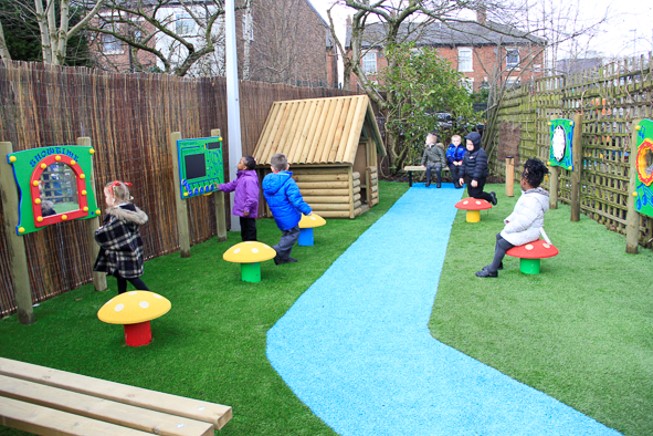
A well-planned outdoor EYFS environment can help create opportunities for children to:
- Develop balance, coordination and physical skills
- Explore their surroundings
- Develop confidence and independence
- Take part in imaginative and role play
- Explore sensory experiences
- Communicate and interact with others
- Experience appropriate challenge and risk
- Learn through movement and practical experiences
Outdoor provision can also be designed to complement indoor learning and provide children with opportunities to use the environment in different ways.
What are the key eligibility requirements?
Projects proposed through Phase 3 must meet the DfE’s eligibility requirements.
These include:
- The project must result in a net increase in childcare places
- The new provision must be operational and offering new childcare places by September 2030 at the latest
- Written permission must be available from the relevant freehold landowner for the proposed nursery provision and works
- The project must fall within one of the eligible types of site
- Projects funded through earlier SBN phases must create additional places beyond those delivered previously and demonstrate good value for money
The DfE also encourages the use of surplus or underused space where appropriate, although using surplus space is not an absolute requirement.
Is there a maximum amount of funding available?
Unlike Phase 2, Phase 3 does not have a fixed capital funding limit per project. Local authorities can apply for the level of capital funding needed for eligible projects, but proposals must demonstrate good value for money.
The DfE expects the majority of projects to cost no more than £1 million. This is not a fixed funding cap.

When will Phase 3 projects be delivered?
The first Phase 3 projects are expected to be operational from September 2027 onwards, with final projects operational and capital funding spent by the end of September 2030.
The funding programme is designed to support delivery across several years rather than requiring every project to be completed immediately.
What should an effective EYFS outdoor environment include?
There is no single layout or list of equipment that will be right for every nursery. The outdoor environment should reflect the needs of the children using it, the available space and the wider aims of the nursery.
When planning an outdoor EYFS area, schools could consider creating a balance of:
Active play
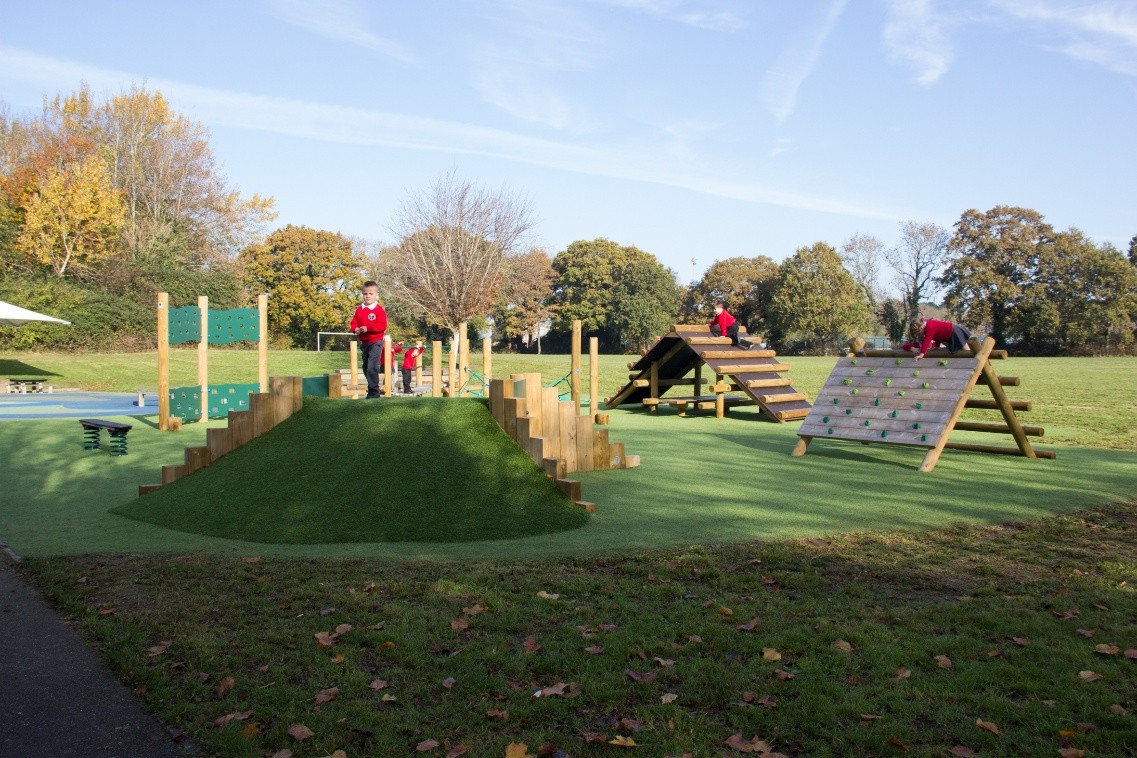
Climbing, balancing, running and other physical activities can give young children opportunities to develop strength, coordination and confidence.
Imaginative play
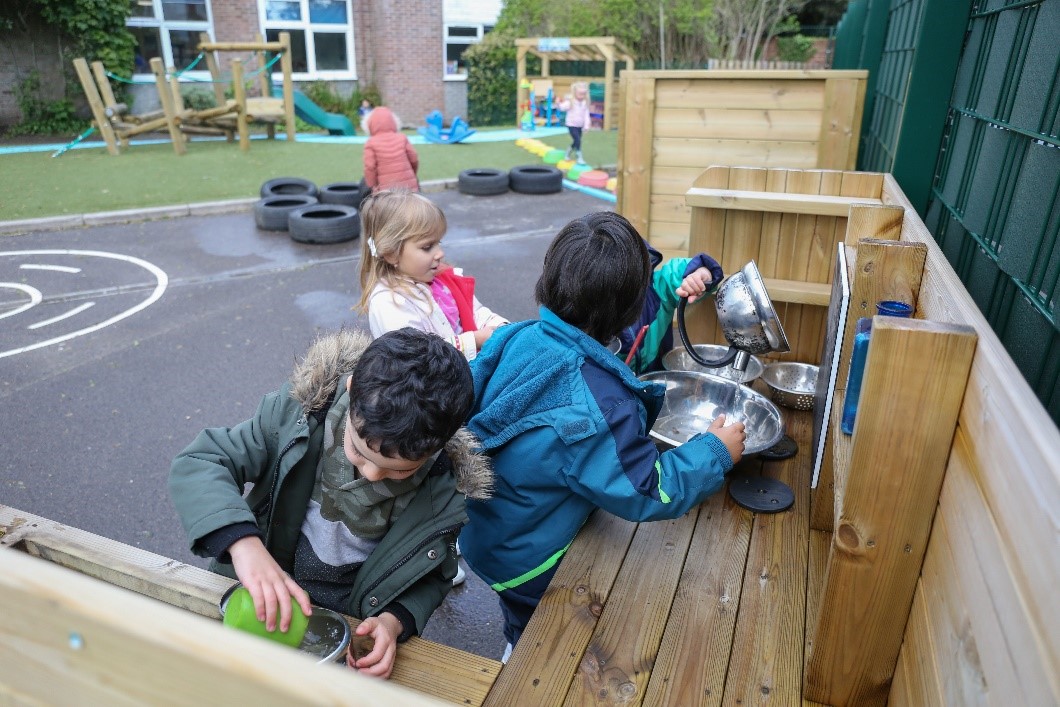
Role-play environments can encourage children to create their own stories, communicate with others and develop their imagination.
Sensory experiences
Sensory features can provide opportunities for children to explore different textures, sounds, movement and natural materials.
Quiet spaces
Not every child needs a highly active environment all the time. Smaller, quieter spaces can provide opportunities for reading, communication, observation and calm play.
Creative learning
Outdoor areas can support mark-making, music, construction and other creative experiences.
Nature and exploration
Plants, natural materials and opportunities to observe the changing environment can encourage curiosity and help children develop an awareness of the natural world.

How can outdoor play support EYFS learning?
A well-designed outdoor environment can provide opportunities to support children’s development across the seven areas of learning and development in the EYFS.
For example, active equipment can support physical development, while role-play and collaborative activities can encourage communication, language and personal, social and emotional development. Outdoor environments can also provide opportunities for children to explore mathematics, understand the world and express themselves through creative activities.
The important consideration is not simply the equipment installed, but how children are able to use the environment and how practitioners support and extend their learning.
How can schools make outdoor nursery spaces inclusive?
Inclusive design should be considered from the beginning of a project rather than added afterwards.
Schools should think about how children with different abilities and needs will move through, access and use the outdoor environment.
This could include considering:
- Accessible routes through the play area
- Different types and levels of physical challenge
- Spaces for quieter activities
- Sensory experiences
- Equipment that encourages children to play alongside one another
- Clear sightlines for staff
- Appropriate surfacing
- Opportunities for children with different physical abilities to participate
The aim is to create an environment where children can participate in meaningful play and learning, while recognising that different children may need different types of support.

How can Fawns help with an outdoor EYFS project?
At Fawns, we design and install outdoor play environments for schools and nurseries across the UK. Our team works with schools to understand their space, discuss specific requirements and develop a playground design around the children who will use it.
If your school is exploring the possibility of creating or expanding school-based nursery provision, an early conversation about your outdoor space can help you understand what may be possible.
Contact our team to discuss your EYFS outdoor play requirements and arrange a free, no-obligation design consultation.
Where can schools find the latest official guidance?
The Department for Education’s School-Based Nursery Capital Grant 2027 to 2030 guidance is the best source for the latest information about Phase 3, including eligibility, the local authority application process and funding requirements.
Schools should also refer to the DfE guidance on establishing school-based nursery provision when planning a new or expanded nursery.
Fawns are not affiliated with the Department for Education or the School-Based Nursery Capital Grant programme. We support schools by designing outdoor spaces that are safe, engaging, inclusive and aligned with EYFS principles.

What to Read Next…
DfE Education Estates Strategy 2026: What Schools Need to Know
Who are Fawns?
We're the longest-established school playground equipment provider around - we know a thing or two about playground design.
With family-ran roots, schools, MATs, nurseries and parish councils trust us to create outdoor playgrounds with a purpose.


Other Blog Posts



We are the one-stop-solution for outdoor playground equipment for schools and parks across the UK.
Based in Hampshire, we pride ourselves on delivering high-quality, durable and innovative school playgrounds.
Fawns Recreational Services Limited - Company Registration Number: 03863973
Site Links
Contact
- 01252 515 199
- sales@fawns.co.uk
- Beech House, Ancells Business Park, Fleet, Hampshire, GU51 2UN

© Playtime By Fawns | 2026 website developed & maintained by digidoda
This site is protected by reCAPTCHA and the Google Privacy Policy and Terms of Service apply.