Learn More About...


Who are Fawns?
We're the longest-established school playground equipment provider around - we know a thing or two about playground design.
With family-ran roots, schools, MATs, nurseries and parish councils trust us to create outdoor playgrounds with a purpose.
Primary School Playground Safety Standards: A Complete UK Guide
Understanding playground safety standards requirements is essential for protecting children, ensuring compliance, and meeting standards. Creating a safe, engaging outdoor environment is important for every primary school, whether upgrading equipment or reviewing compliance.
What Are Primary School Playground Safety Standards in the UK?
Primary school playground safety standards UK are regulations and guidelines, including BS EN 1176 and BS EN 1177, that ensure playground equipment, surfacing, and layouts are safe, compliant, and suitable for children.
These standards apply to:
- Fixed public playground equipment (e.g. climbing frames, trim trails, slides)
- Surfacing
- Playground layout and spacing
- Ongoing inspection and maintenance
The standard we comply with is BS EN 1176, which governs how playground equipment should be designed, installed, and maintained. In addition, BS EN 1177 sets out the method for assessing the impact-absorbing properties of surfaces used within designated fall zones.
Key UK Regulations for Schools to Follow
Primary schools in the UK must comply with safety regulations to ensure playgrounds are safe, inclusive and compliant. These standards are designed to control risk while still allowing children to benefit from active, engaging outdoor play.
BS EN 1176 – Playground Equipment Safety
This is the core European standard that governs the design, manufacture, installation, and maintenance of playground equipment used in schools.
It ensures that all playground equipment:
- Is structurally sound and long-lasting
- Eliminates entrapment
- Minimises fall risks
- Is designed for the safe use of the intended user
For primary schools, this is particularly important because equipment must be suitable for a wide developmental age range.
BS EN 1177 – Safer Surfacing
Surfacing plays a crucial role in helping to minimise the impact of risk-taking experiences that are important for children’s development. BS EN 1177 sets out the requirements for impact-absorbing surfaces and ensures surfacing is tested and rated according to its critical fall height (CFH), meaning it can safely absorb impact from specific equipment heights.
Approved surfacing options commonly used in UK primary schools include:
- Wetpour rubber
- Durabond (Rubber Mulch)
- Artificial grass with shock pads
All approved surfacing systems are rigorously tested to ensure they meet required safety performance levels and maintain their protective qualities over time, even under heavy daily use.
Health and Safety Responsibilities
Under UK legislation, schools have a legal duty of care to ensure that all pupils, staff, and visitors are kept safe while on school premises, including outdoor play areas.
Schools are required to ensure they are actively:
- Identifying hazards
- Taking preventative action
- Keeping safety records
Failure to meet these responsibilities can result in accidents, liability issues, and negative inspection outcomes.
Why Playground Safety Matters in Primary Schools
Primary-aged children are still developing coordination, balance, and awareness of risk. A well-designed playground supports this development while keeping risks manageable.
Meeting UK primary school playground safety standards is essential for supporting safe and active play.
Safe playgrounds help:
- Minimise injuries
- Encourage active, healthy play
- Improve behaviour during breaktimes
- Support positive wellbeing
Safety should not remove challenge. Children benefit from environments that allow controlled risk-taking, which builds confidence and resilience.
5 Common Playground Safety Issues (And How to Fix Them)
Even well-maintained primary school playgrounds can develop safety risks over time due to constant use, weather exposure, and natural wear and tear. Identifying and addressing these issues early is essential for maintaining compliance with primary school playground European Safety Standards and ensuring pupil safety.
Below are the most common issues found in primary school playgrounds, and how to fix them effectively.
1. Worn or Damaged Surfacing
Playground surfacing plays a vital role in protecting children from injury, but it naturally deteriorates over time due to heavy foot traffic, weather conditions, and UV exposure.
Common signs of wear include:
- Cracks or splitting in wetpour surfaces
- Loose or missing rubber mulch
- Flattened or compacted safety surfacing
- Exposed hard ground beneath surface layers
Solution:
Carry out regular inspections and repair damaged areas immediately. In cases of extensive wear, resurfacing may be required to restore full impact protection and ensure compliance with BS EN 1177 standards.
2. Poor Equipment Spacing
Incorrect layout design or overcrowded play areas can significantly increase the risk of collisions between children or contact with equipment during active play.
Common issues include:
- Equipment placed too closely together
- Insufficient fall zones around high-use items like swings, slides or roundabouts
- Overlapping play zones for different age groups
Solution:
Ensure all equipment is installed with correct clear falling and minimum space zones as specified in BS EN 1176 guidelines. A professional playground design review can help optimise layout for both safety and play value.
3. Lack of Maintenance
Without a structured maintenance plan, small issues can quickly become serious safety hazards.
Typical problems include:
- Loose bolts, screws, or fixings
- Rusted metal components
- Splintering timber structures
- General wear from long-term use
Solution:
Implement a planned maintenance schedule that includes weekly visual checks, routine inspections, and annual professional assessments. Any defects should be addressed immediately to prevent escalation.
4. Outdated Equipment
Older playground equipment may no longer comply with current safety standards or may not meet modern expectations for inclusivity.
Risks include:
- Non-compliant design features
- Reduced structural integrity due to age
- Lack of inclusive or SEND-friendly equipment
- Outdated materials that degrade over time
Solution:
Upgrade to compliant equipment designed to meet current BS EN 1176 standards. New installations also provide opportunities to improve inclusivity and boost play value.
5. Inadequate Drainage and Water Pooling
Poor drainage is a common but often overlooked issue, especially in the UK climate.
This can lead to:
- Standing water after rain
- Slippery surfaces increasing fall risk
- Accelerated deterioration of surfacing materials
- Limited usability of outdoor space
Solution:
Improve sub-base drainage systems during installation or retrofit drainage channels where needed. Permeable surfacing options such as wetpour can help reduce water accumulation.
Designing a Safe and Engaging Playground
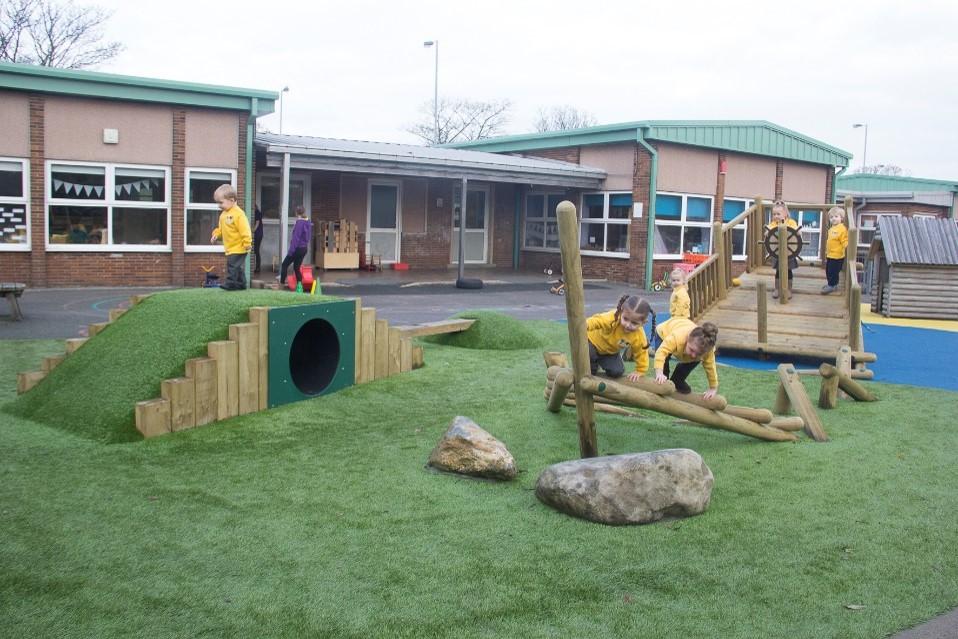
The best primary school playgrounds strike a balance between safety and play value.
Key design considerations include:
- Separate zones for appropriate age groups (EYFS/ KS1 & KS2)
- Inclusive equipment for children with SEND
- Clear fall zones and minimum safety spacing
- Safe surfacing in all high-impact areas
A well-designed playground not only meets safety standards but also enhances learning, creativity, and physical development.
Playground Safety Checklist for Primary Schools
Use this playground inspection checklist to ensure your outdoor environment meets primary school playground safety standards UK:
- Equipment complies with BS EN 1176
- Surfacing meets BS EN 1177 requirements
- Daily and routine inspections are carried out
- Annual inspection is completed and recorded
- Risk assessments are up to date
- Equipment is suitable for the intended users
- Maintenance plan is in place
How can Fawns Help?
If you’re unsure whether your outdoor space meets primary school playground UK safety standards, getting expert advice can save time, reduce risk, and ensure full compliance.
With extensive experience designing and installing compliant playgrounds across the UK, we ensure all projects meet current safety standards including BS EN 1176 and BS EN 1177.
We can support you with:
- Playground design and layout planning
- Safety upgrades and surfacing improvements
- Fully compliant equipment installation
Contact Us Today for expert advice or to discuss your project.
What to Read Next
Who are Fawns?
We're the longest-established school playground equipment provider around - we know a thing or two about playground design.
With family-ran roots, schools, MATs, nurseries and parish councils trust us to create outdoor playgrounds with a purpose.


Other Blog Posts




We are the one-stop-solution for outdoor playground equipment for schools and parks across the UK.
Based in Hampshire, we pride ourselves on delivering high-quality, durable and innovative school playgrounds.
Fawns Recreational Services Limited - Company Registration Number: 03863973
Site Links
Contact
- 01252 515 199
- sales@fawns.co.uk
- Beech House, Ancells Business Park, Fleet, Hampshire, GU51 2UN

© Playtime By Fawns | 2026 website developed & maintained by digidoda
This site is protected by reCAPTCHA and the Google Privacy Policy and Terms of Service apply.