
Learn More About...


Who are Fawns?
We're the longest-established school playground equipment provider around - we know a thing or two about playground design.
With family-ran roots, schools, MATs, nurseries and parish councils trust us to create outdoor playgrounds with a purpose.
How Can Outdoor Play Support Children with Autism?
In this article we will explore the range of benefits for outdoor play for children with autism. We will explore the range of autistic traits, how it can present in different children and a range of benefits of outdoor play.

Autism in schools: a summary
It’s estimated around 1 in 100 people are on the autistic spectrum. With 700,000 adults and children in the UK alone.
Around 70% of children with autism are educated in mainstream schools. However, these can be challenging environments due to noise and crowds.
In a survey carried out by the National Autistic Society, the following was found:
- 26% of autistic children felt happy at school
- Only 24% of children felt included
- A staggering 60% of teachers who were surveyed said they felt they didn’t have the necessary training to teach children on the autistic spectrum.
So, what is autism? According to the National Institute of Mental Health Autism spectrum disorder (ASD) is a condition can affects how a person communicates, learns, behaves, and relates to others. It can be diagnosed at any age, but it’s called a “developmental disorder” because the signs usually start to show up in the first couple of years of life.
Autism can present differently in boys and girls. Boys often have more obvious traits, such as repetitive movements or social awkwardness, making it easier to notice.
Girls, on the other hand, might have more subtle signs that can get overlooked or mistaken for something else. They’re often better at “masking” or blending in by copying how others act socially. The tricky part is, all that effort to fit in can take a toll, sometimes leading to anxiety, depression, or pulling away from social situations.

Why is outdoor provision important for children with autism?
Open spaces invite all kinds of experiences that can boost sensory integration, spark communication, help with emotional regulation, and keep our bodies healthy. Plus, they’re great for building motor skills, staying balanced (both physically and emotionally), and enjoying meaningful social moments.
Socialisation and noisy environments can often feel overwhelming for children with autism. Outdoor play for children with autism can serve as a helpful outlet, providing a great tool for distraction and ‘tuning out’ surrounding noise. Encouraging children to step outside and engage with nature as part of their learning can also transform the atmosphere in the classroom, creating a calmer learning environment.
Research has found a connection between reduced anxiety and time spent outside in nature. If you take yourself to a calm environment, it’s likely to involve the outdoors rather than a busy supermarket!
Let’s explore 7 advantages of outdoor play for children with autism and find out how you can make the most of them in your school playground.
1. Encourages social interaction
Unstructured or structured outdoor environments can be an excellent space to create an area where children can explore social interactions at their own pace. These inclusive areas can offer low-pressure opportunities to develop social awareness and connection.
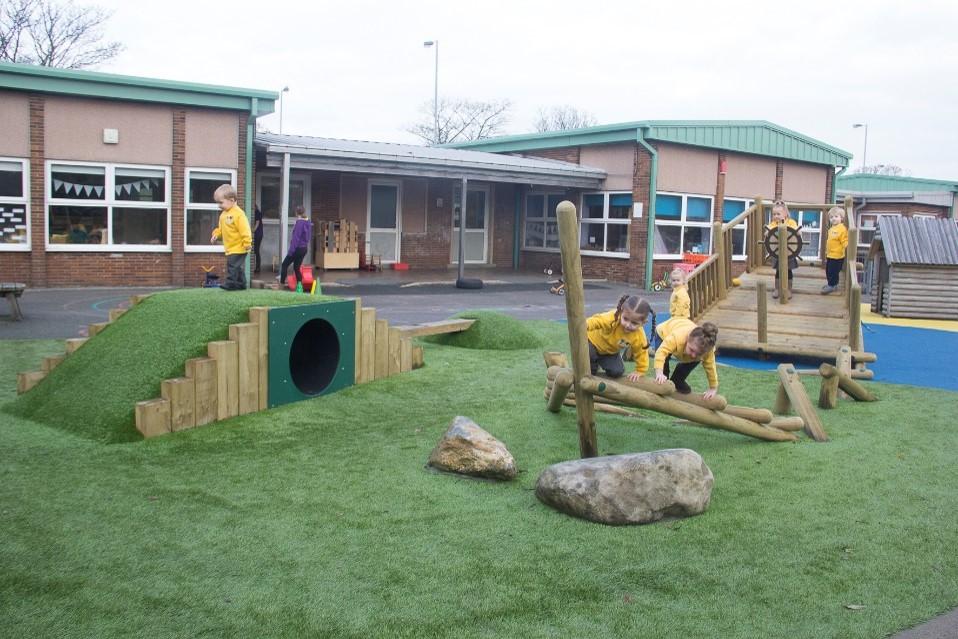
The Woodland Teepee, Shade Sails and Sensory Paths are excellent spaces for children with autism and provide a designated area for any low-pressure social opportunities.
Even small group activities such as obstacle course or scavenger hunts around the playground can help promote team work and social development.
You may find it useful to read how to use outdoor play to support children with SLCN for ideas and tips on using outdoor play for boosting communication.

2. Supports sensory feedback
For many children with autism, the world can feel overwhelming. Often outdoor environments are filled with unpredictable noises, bright lights, or unfamiliar textures. This can sometimes lead to sensory overload. But in the right setting, sensory experiences can also be calming.
In natural spaces, children can feel the wind on their face, run their fingers over rough bark, smell fresh flowers, or watch sunlight filtering through leaves.
For autistic children, this can mean less stress, more comfort, and greater engagement with the world around them. 
Outdoor play for children with autism, in a playground sensory-focused, can make a big difference:
- Sand Play invites tactile exploration and can be soothing through repetitive motions.
- Rainbow Arches provide visual stimulation and encourage imaginative play.
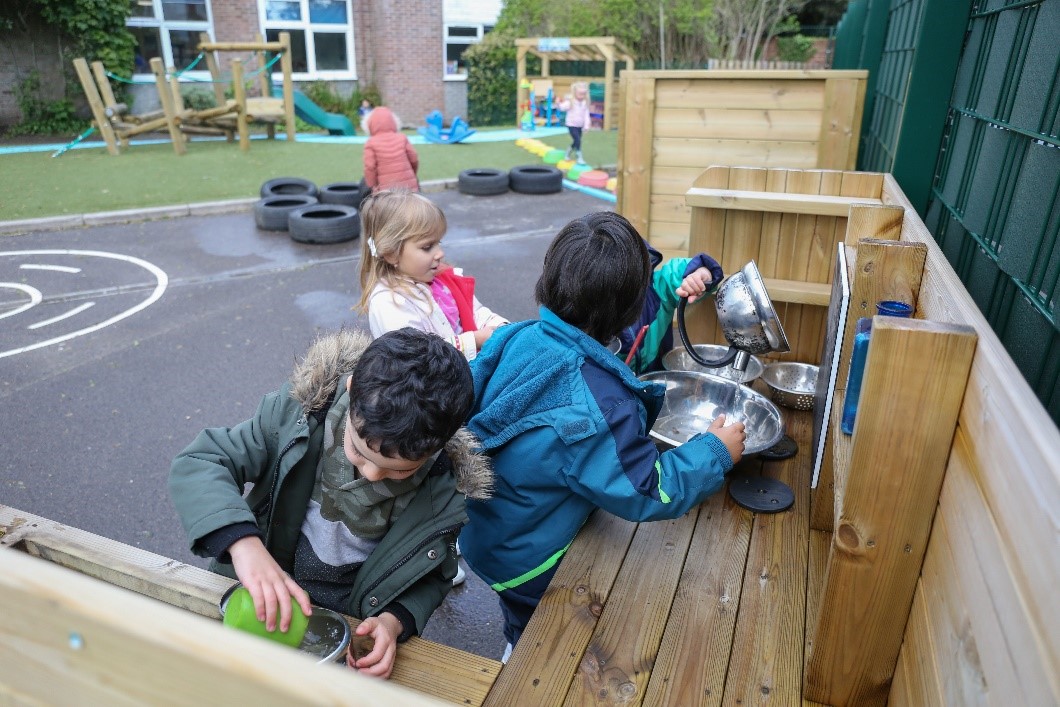
- Water Tables combine touch and sound for calming, rhythmic activities.
- Mud Kitchens offer opportunities for creative, messy play with textures and scents. Encouraging the imaginative play as well.
- Planters filled with flowers, herbs, or vegetables bring ongoing changes in smell, colour, and even taste.
For more ideas and equipment, discover the rest of our SEND Sensory Range.
3. Promotes calm and reduces stress
Outdoor play for children with autism can improve emotional stability by lowering stress levels and provide a soothing and calming environment.
An outside space offers a naturally calming and soothing environment, allowing children to unwind and release built-up tension. The sights, sounds, and fresh air of nature can soothe the nervous system, helping to lower feelings of stress and anxiety.
Engaging in physical activities outside also provides a healthy outlet for energy and emotions, which can support better mood stability and emotional regulation. 
Over time, these experiences can strengthen a child’s ability to manage challenging feelings, respond more flexibly to stress, and develop a greater sense of overall well-being.
One great way to bring this idea into school playgrounds is by adding quiet zones. These calm spaces can extend into outdoor play areas using features like Dens, Sailaway Canopies or Playground Markings.
Check out Outdoor Play: Why is it Important? to understand the key benefits of outdoor play.
4. Encourages physical activity
Outdoor play for children with autism helps promote movement in natural, enjoyable ways. Activities such as climbing, running, and exploring help develop motor skills while fostering healthy habits.
Explore The Benefits of Physical Play blog here.
For all children, mastering new physical challenges and engaging with peers can strengthen self-esteem and confidence. For children with autism, these experiences can be especially meaningful, pushing them beyond their comfort zones and offering opportunities to build their confidence.
Activities like playing catch, kicking a ball back and forth, or tackling bigger adventures such as climbing Space Frames and Young Explorer Towers are fantastic for physical development. They get the muscles working, improve coordination, and help with balance in a way that feels like play.
For autistic children, these activities offer a gentle way to practise motor skills, explore new sensations, and enjoy success in a safe, supported environment.

5. Improves focus and attention
We all know how powerful outside space can be when it comes to helping children recharge their focus and clear their minds, especially children on with autism.
Green spaces can help to reduce distractions, making it easier for children to stay engaged in a game, a task, or general social play. This can also help children with ADHD, which often occurs alongside autism.
And let’s be honest, fresh air and sunshine have a way of lifting anyone’s mood, which is so important for learning and staying motivated.
How can this be made even better for children with autism? Including a special interest into outdoor activities, for example, turning a park trip into a dinosaur fossil hunt or a birdwatching adventure, focus and attention can soar even higher.
Outdoor play for children with autism also sparks imagination, problem-solving, and the kind of thinking that helps children take on new challenges. Activities such as a nature memory game can help strengthen attention. In other words, spending time outside is a natural way to support learning and development.
6. Boosts communication skills
When it comes to sparking conversations, the great outdoors really can have the upper hand over indoor spaces. Out in the fresh air if they have interesting topics of conversation and play this can help reduce expectations of communication. Whether they’re comparing a rock they’ve just found or plotting the next step in their fort adventure. 
Shared moments like exploring a new corner of the playground or working together to build something from scratch naturally invite both verbal and nonverbal communication.
Physical Development Blocks and Moveable Trim Trails are an excellent tool for getting little bodies moving and voices chatting as they problem-solve and cheer each other on.
And of course, imaginative play takes things to a whole new level. From Forts to busy Mud Kitchens and Dens & Playhouses, these spaces fire up curiosity, help children make sense of the world around them, and give their communication skills a real boost.
7. Supports emotional regulation
Outdoor play for children with autism provides the freedom to explore at their own pace, giving them time and room to reflect, unwind, and develop their own coping strategies. This kind of sensory stability is especially important for children who may find emotional regulation in more overstimulating environments.
While this may not always be possible in a school setting, it can be valuable to encourage during break times with additional support from teaching assistants, lunchtime staff, or even a peer from their class. This can help foster empathy and develop essential social skills.

Getting children with autism outdoors can open up a whole world of benefits. Fresh air and open spaces can spark better communication, boost sensory skills, support emotional balance, and keep bodies healthy and active. The outdoors isn’t just “somewhere to play”, it’s a safe, joyful space where every child has the chance to shine.
Even a little nature time can go a long way. If schools have the opportunity to include outdoor play into the day, even in small doses, you are encouraging growth and learning. As well as creating positive, meaningful moments that every child, no matter their needs, can enjoy and remember.
How can Fawns help?
Could your playground could benefit from an update? Or even just some thoughtful additions to become more inclusive for your autistic children? We’re here to help. Complete our Contact Us Form today and our helpful team can offer any assistance.
Alternatively, visit our SEND Page to explore case studies and get inspired with new ideas.
What to read next
How To Create an Inclusive Playground
Who are Fawns?
We're the longest-established school playground equipment provider around - we know a thing or two about playground design.
With family-ran roots, schools, MATs, nurseries and parish councils trust us to create outdoor playgrounds with a purpose.


Other Blog Posts




We are the one-stop-solution for outdoor playground equipment for schools and parks across the UK.
Based in Hampshire, we pride ourselves on delivering high-quality, durable and innovative school playgrounds.
Fawns Recreational Services Limited - Company Registration Number: 03863973
Site Links
Contact
- 01252 515 199
- sales@fawns.co.uk
- Beech House, Ancells Business Park, Fleet, Hampshire, GU51 2UN

© Playtime By Fawns | 2026 website developed & maintained by digidoda
This site is protected by reCAPTCHA and the Google Privacy Policy and Terms of Service apply.