Learn More About...


Who are Fawns?
We're the longest-established school playground equipment provider around - we know a thing or two about playground design.
With family-ran roots, schools, MATs, nurseries and parish councils trust us to create outdoor playgrounds with a purpose.
Outdoor Activities for Children: Why Being Active Matters
Children today have more opportunities than ever to stay entertained indoors. From television and tablets to video games and smartphones, technology can make it easy for children to spend long periods sitting down. At the same time, busier roads, limited outdoor space and increasingly structured lifestyles can make it harder for children to play outside as freely as previous generations did.
However, regular outdoor activities for children are an important part of a healthy and active lifestyle. Outdoor play gives children the space to run, jump, climb, balance, explore and play with others, while also providing opportunities to develop confidence, independence and social skills.
With the UK Chief Medical Officers recommending that children and young people aged 5 to 18 aim for an average of at least 60 minutes of moderate-to-vigorous physical activity each day across the week, finding opportunities for children to be active is more important than ever.
Are Children Getting Enough Outdoor Activity?
There has been growing concern over the amount of time children spend being physically active and outdoors.
Research published by the Office for National Statistics found that, in 2014–15, children aged 8 to 15 spent an average of 68 minutes of their leisure time each day taking part in outdoor activities, sports-related activities or active travel, with an average of just 16 minutes spent in parks, countryside, seaside, beaches or coastal locations.
Although this data is not a measure of children’s current activity levels, it demonstrates the long-standing shift in how children spend their leisure time.
There are many reasons why children may have fewer opportunities to play outside than previous generations.
Changing lifestyles
In the past, it was common for children to play outside with friends in their neighbourhoods. Quieter roads and lower levels of traffic meant that children could often play close to home while parents kept an eye on them.
Today, many residential areas have significantly more traffic, making roads less suitable for informal outdoor play. Parents may also have concerns about safety, while school days, clubs, homework and other commitments can reduce the amount of free time available for outdoor play.
Gardens are a great alternative, however, for many families living in cities, gardens are too small or they live in flats with no access to a safe outdoor area. This makes accessible public spaces such as parks, playgrounds, recreation grounds and school playgrounds particularly important.
Technology and Children’s Activity Levels
Technology is another factor that can influence how children spend their free time.
Television, tablets, smartphones, computers and video games can provide children with entertainment and opportunities to socialise without leaving the house. While technology can have a positive role in children’s lives, spending long periods sitting or being inactive can reduce opportunities for movement.
The current physical activity guidance for children and young people recommends reducing sedentary time and breaking up long periods of inactivity with physical activity where possible. The aim shouldn’t be to remove technology completely. Instead, children need a healthy balance between screen-based activities, learning, rest and opportunities to move.
This is where enjoyable children’s outdoor activities can make a real difference. Making physical activity enjoyable can help create positive experiences around being active.
Why Is Outdoor Activity Important for Children?
Outdoor play offers much more than an opportunity for children to burn off energy. It can support children’s physical health, emotional wellbeing, social development and confidence.
1. Helping children stay active
Being outdoors gives children more space to move.
Running, jumping, climbing, balancing, swinging, skipping and playing games all encourage children to use different muscle groups and develop a wide range of physical skills. As well as physical skills, outdoor play helps to encourage critical thinking and problem-solving skills.
Playgrounds are particularly beneficial because they can provide several different ways for children to move within one space. Climbing equipment can develop strength and coordination, while swings, slides, balance equipment and active games can encourage movement in different ways.
The latest UK guidance recommends that children aged 5 to 18 take part in an average of at least 60 minutes of moderate-to-vigorous physical activity each day across the week. This activity can include play, walking, running, cycling, sport, PE and active travel.

2. Supports physical development
Children develop important fundamental movement skills through active play.
Activities such as climbing, jumping, running and balancing can help children develop:
- Balance and coordination
- Strength
- Agility
- Spatial awareness
- Motor skills
- Stamina
- Movement confidence
For younger children, outdoor play can also provide opportunities to practise basic movements such as walking, climbing, throwing, catching and jumping.
The updated UK guidance for children aged 1 to 5 recommends at least 180 minutes of physical activity each day, spread throughout the day.
Activities can include playground play, climbing, jumping, games, walking, cycling and other forms of active play.
3. Support children’s wellbeing
Physical activity isn’t only important for children’s physical health. It can also contribute to their emotional wellbeing. Being outdoors can provide children with space to explore, socialise, be creative and take a break from more structured environments.
Government guidance highlights several benefits associated with physical activity, including improved confidence and social skills, better concentration and learning, improved sleep, stronger muscles and bones and better overall health and fitness.
Natural environments can provide additional opportunities for exploration and discovery. Forest Research reported that contact with nature can provide physical, mental and social wellbeing benefits for children, as well as opportunities for learning and developing an interest in nature.
4. Boosts social skills
Many outdoor games involve working with other children.
Whether children are playing football, completing an obstacle course, creating an imaginary game or taking turns on playground equipment, they have opportunities to practise important social skills.
Outdoor play can encourage children to:
- Take turns
- Communicate with others
- Cooperate
- Negotiate rules
- Solve problems
- Make friends
- Manage disagreements
- Develop independence
These experiences can help children become more confident when interacting with their peers.
5. Enhances creativity and imagination
Outdoor spaces don’t always need to have a fixed purpose.
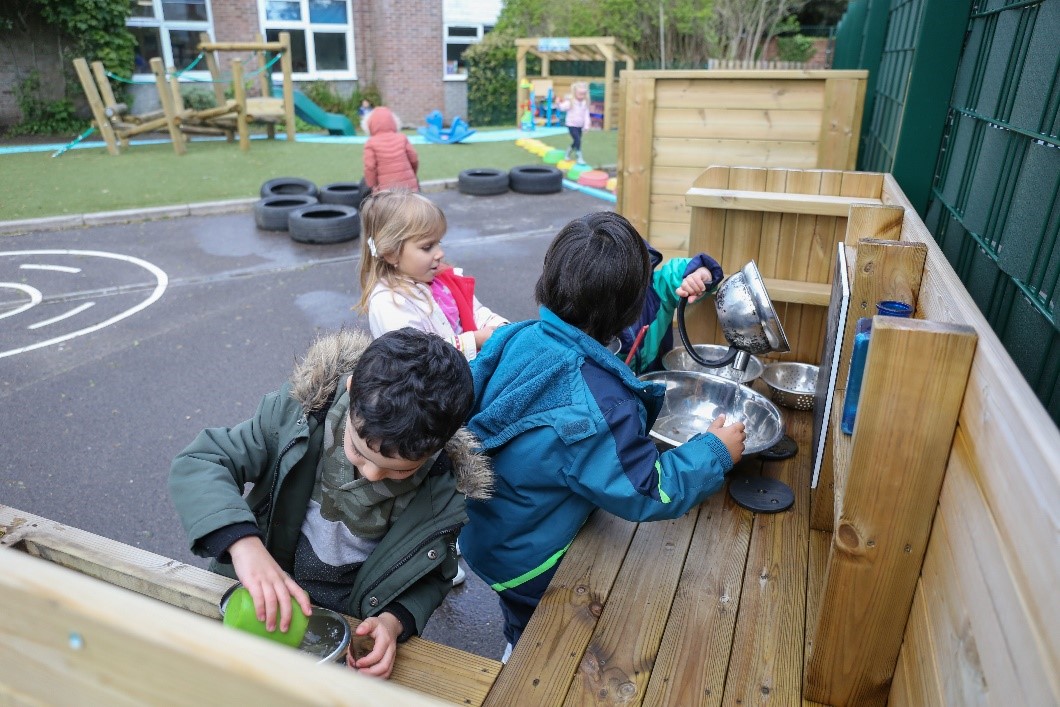
A climbing frame can become a castle. A playground tower can become a spaceship. A collection of logs can become an obstacle course. A quiet corner of the playground can become a place to investigate plants, insects and nature.
Giving children opportunities for imaginative and open-ended play allows them to create their own games and activities rather than simply following instructions. These can support creativity, problem-solving and independence while making outdoor play more engaging.
What Counts as an Outdoor Activity for Children?
Outdoor physical activity doesn’t have to mean organised sport. One of the benefits of outdoor play is that there are countless ways for children to get moving, regardless of their interests or abilities.
Examples of outdoor activities for children include:
- Running and chasing games
- Climbing
- Jumping
- Skipping
- Cycling
- Football and other ball games
- Obstacle courses
- Hide and seek
- Nature walks
- Gardening
- Outdoor learning activities
- Dancing
- Balancing games
- Playground activities
- Treasure hunts
- Active role play
A good outdoor space should ideally offer a variety of opportunities so children can choose activities that suit their interests, confidence and physical abilities.

How Can Schools Encourage More Outdoor Activity?
Schools have an important role to play in helping children become more physically active. For many children, the school playground provides a regular opportunity to spend time outdoors and be physically active during the school day, lunchtimes and outdoor learning can all provide opportunities for children to move throughout the school day.
A well-designed playground can encourage different types of activity by including equipment and spaces for climbing, balancing, swinging, running, imaginative play and social interaction.
Schools can also introduce simple activities that require little or no equipment, such as:
Active playground games
Encourage children to play traditional games such as tag, hopscotch, skipping games and obstacle courses.
Adventure play
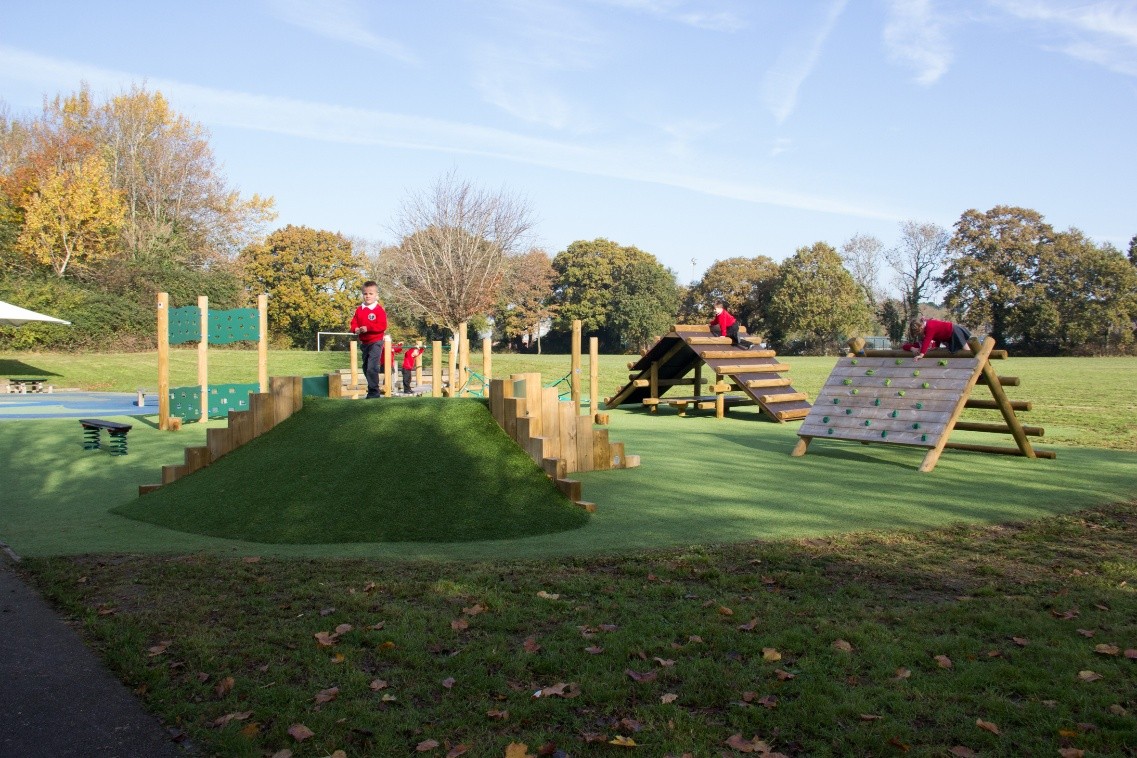
Use climbing, balancing and agility equipment to create opportunities for children to challenge themselves physically.
Outdoor learning
Take lessons outside and combine learning with movement. Maths challenges, nature activities and team games can all be adapted for outdoor spaces.
Sports areas
Dedicated spaces for football, basketball, tennis or other activities can encourage more vigorous physical activity.
Free play
Not every activity needs to be structured. Giving children time and space to create their own games can be just as valuable.

The Children’s People and Nature Survey for England highlights the importance of playgrounds in encouraging children to spend more time outdoors. In the child-led question introduced in 2023, around 34% of children and young people ranked having a playground as the most important factor that would encourage them to go into natural spaces more. This was the most popular response, ahead of good weather (22%) and places to play sports (14%).
This highlights the important role that attractive, accessible play spaces can have in encouraging children to get outdoors.
How Can Families Encourage Children to Be More Active Outdoors?
Schools aren’t the only places where children can be encouraged to spend more time outdoors.
Families can build outdoor activity into everyday life without needing expensive equipment or complicated plans.
Simple ideas include:
- Walking or cycling instead of travelling by car where practical
- Visiting a local park or playground
- Going for a family nature walk
- Playing ball games in the garden or park
- Going on a bike or scooter ride
- Gardening together
- Organising outdoor treasure hunts
- Playing traditional playground games
- Exploring local woods, beaches or green spaces
The key is to make being active enjoyable rather than making children feel that exercise is another task they have to complete.
Short bursts of activity throughout the day can also contribute to children’s overall activity levels. The NHS emphasises that every bit of movement counts and encourages families to find opportunities for children to move more throughout the day.
How Much Physical Activity Should Children Get?
Babies under 1
Babies under 1 should be encouraged to be active throughout the day in a variety of ways. For babies who are not yet mobile, the current UK guidance recommends at least 30 minutes of tummy time spread throughout the day while they are awake, alongside movements such as reaching, grasping, pushing, pulling and rolling. Once babies can move around, they should be encouraged to be as active as possible in a safe and supervised environment.
Children aged 1 to 5
Children aged 1 to 5 should aim for at least 180 minutes of physical activity each day, spread throughout the day. This can include a mixture of light and more energetic activities, such as walking, climbing, running, jumping, playground activities, dancing, cycling and active games. For children aged 3 to 4, at least 60 minutes of these 180 minutes should be moderate-to-vigorous physical activity.
Children and young people aged 5 to 18
Children and young people aged 5 to 18 should aim for an average of at least 60 minutes of moderate-to-vigorous physical activity per day across the week.
This should include a variety of activities and intensities to help develop movement skills, muscular fitness and bone strength. Children should aim to reduce the amount of time they spend sedentary and, where possible, break up long periods of inactivity with some physical activity.
Importantly, not all of this activity needs to take place in one session. Playing in the playground, walking to school, taking part in PE, taking part in sports and playing outside can all contribute to a child’s overall activity levels.
Creating More Opportunities for Outdoor Activity 
Ensuring children get enough physical activity isn’t about making every minute of the day structured or organised. It is about creating more opportunities for children to move, explore and play.
For schools, investing in an engaging playground can help make physical activity a natural part of the school day. A well-planned outdoor space can provide opportunities for active play, imaginative play, social interaction and outdoor learning within the same environment.
For families, regular trips to parks, playgrounds, beaches, woodlands and other outdoor spaces can help children develop positive habits around being active.
Ultimately, outdoor activities for children should be fun, accessible and varied. When children have spaces that encourage them to explore, challenge themselves and play with others, being active becomes something they enjoy rather than something they are simply told to do.
Encourage Active Outdoor Play with Playtime by Fawns
At Playtime by Fawns, we design and install playgrounds that encourage children to get active, explore their surroundings and enjoy outdoor play.
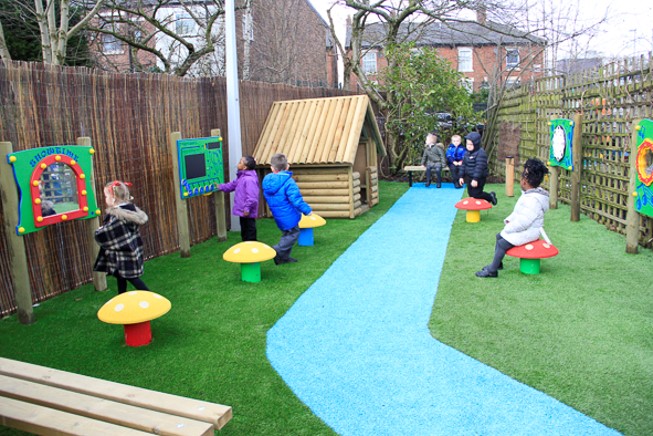
From climbing and balancing equipment to imaginative play areas and multi-activity playgrounds, we can help schools create outdoor spaces that support children’s physical development, wellbeing and enjoyment.
Explore our range of outdoor play equipment for schools or contact Playtime by Fawns to discuss your playground project.
Sources
- NHS – Physical activity guidelines for children under 5
- NHS – Physical activity guidelines for children and young people
- GOV.UK – Physical activity guidelines for children and young people aged 5 to 18
- GOV.UK – Physical activity guidelines for early years
- GOV.UK – Children’s People and Nature Survey for England
- Office for National Statistics – Children’s engagement with the outdoors and sports activities
What to Read Next
School Playground Activities to Keep Children Active
How to Choose a Climbing Frame for Your School
Playground Ideas for Primary Schools: Design Ideas that Solve Real School Challenges
Who are Fawns?
We're the longest-established school playground equipment provider around - we know a thing or two about playground design.
With family-ran roots, schools, MATs, nurseries and parish councils trust us to create outdoor playgrounds with a purpose.


Other Blog Posts



We are the one-stop-solution for outdoor playground equipment for schools and parks across the UK.
Based in Hampshire, we pride ourselves on delivering high-quality, durable and innovative school playgrounds.
Fawns Recreational Services Limited - Company Registration Number: 03863973
Site Links
Contact
- 01252 515 199
- sales@fawns.co.uk
- Beech House, Ancells Business Park, Fleet, Hampshire, GU51 2UN

© Playtime By Fawns | 2026 website developed & maintained by digidoda
This site is protected by reCAPTCHA and the Google Privacy Policy and Terms of Service apply.