Learn More About...


Who are Fawns?
We're the longest-established school playground equipment provider around - we know a thing or two about playground design.
With family-ran roots, schools, MATs, nurseries and parish councils trust us to create outdoor playgrounds with a purpose.
Emotional regulation strategies for schools
Outdoor space, however small, is one of the most underused SEND tools a school has.
Most playgrounds work hard only during break times, lunch times, and for active lessons like PE.
Many schools are now getting creative and using their outdoor environments to facilitate SEND interventions, including emotional regulation strategies, in ways that often aren’t possible indoors.

Why do children need to regulate?
Children regulate their emotions and nervous systems all day, without realising it.
Fidgeting in a chair, doodling, or even humming can be attempts at self-regulation. For most children, these small adjustments are enough to keep them in a state where they can learn and connect.
But for a growing number, particularly those with SEMH needs, ADHD, autism or who’ve experienced trauma, there can be a large gap between what their nervous system needs and what the school day offers.
When the gap between their needs and the current environment becomes too wide, dysregulation follows
Emotional dysregulation can show up as aggression, refusal or defiance, meltdown, shutdown or anxiety. The behaviour is the signal that a need is not being met, not the problem to ‘manage’.
Children’s brains are still developing. The prefrontal cortex, the part responsible for impulse control and emotional regulation, isn’t fully formed until the mid-to-late twenties.
For adolescents, add in the hormonal shifts of puberty, and big feelings become increasingly hard to control and manage alone.
SEMH is one of the fastest-growing primary need area among pupils with EHC plans in England, and it’s rising at every key stage.
Regulation is a skill that develops through experience and repeated opportunities to practise, with the right kind of support. Your outdoor environment can be one of the places where regulation strategies are put into practice.

Why are schools using their outdoor space to help?
The SEND reform consultation paper released in February 2026 has made one direction of travel clear: more children with additional needs will be supported within mainstream settings.
Schools are aiming to identify needs even earlier, utilise specialist provisions in a different way than before and ensure their SEND provision for mainstream is a priority.
For many school leaders, that means being creative with what they already have. Indoor breakout space is limited, and formal intervention time is hard to timetable.
Outdoor space offers something different: room to move, natural light and the freedom to be louder and more physical than any indoor setting allows.
When a child is dysregulated, sitting quietly in a corridor isn’t always effective.
The body needs to move through a stress response, not sit in it. Schools are recognising this and starting to use their playgrounds as an active part of their SEMH and regulation offer, not ‘just’ somewhere for children to run around.
Understanding which types of movement help and when is the starting point.
How can children regulate?
Regulation isn’t one-size-fits-all. Every child’s nervous system is shaped differently, by genetics, developmental stage, experience and environment.
Adolescents are also navigating the neurological and hormonal changes of puberty, which can lower tolerance and make self-regulation strategies harder to access consistently.
There are three types of movement-based regulation that schools can use outdoors, these are the components that make up a well-structured sensory circuit.
- Heavy work
- Alerting movements
- Calming movements
Heavy work
Heavy work is any activity involving pushing, pulling, carrying, climbing or resistance. It provides proprioceptive input (one of the 8 sensory systems).
It’s the body’s internal sense of position, pressure and effort, which has a naturally organising, grounding effect on the nervous system.
It’s one of the most effective regulation strategies for dysregulated children because it works at a physical level.
Outdoor heavy work ideas:
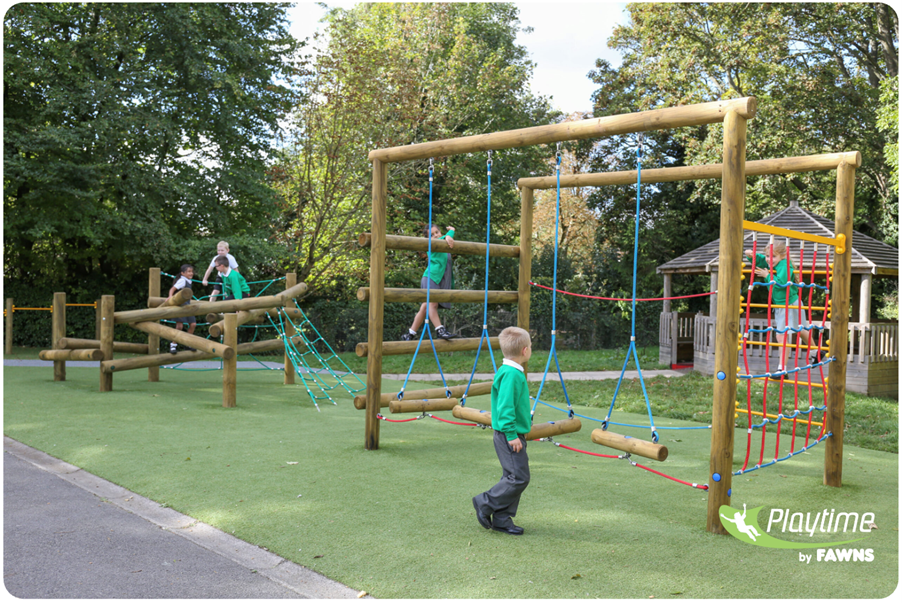
- Monkey bars
- Log traverses (pushing and pulling body weight across)
- Climbing frames and scramble nets
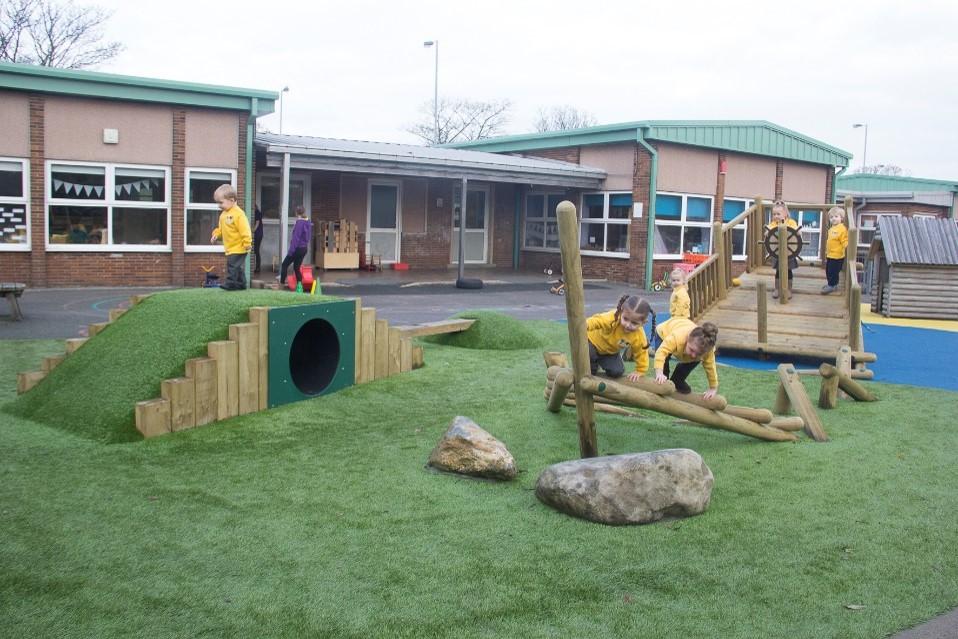
- Crawling through tunnels
- Carrying equipment like cones, bags or planks across the playground
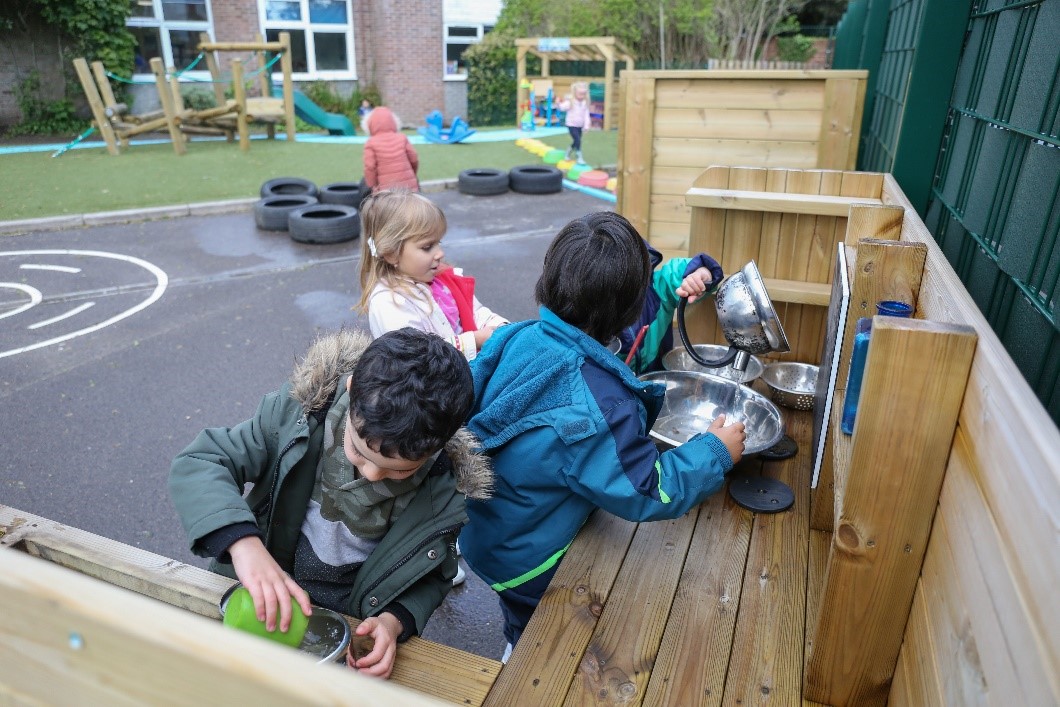
- Digging in a planting area or mud kitchen
- Wall push-ups against an outdoor wall

Alerting movement
Not every dysregulated child needs to be calmed down. Some arrive in a low, shut-down state where their arousal is too low to engage with learning.
Alerting movement raises nervous system activation, increasing focus and readiness to re-engage.
This is fast, energising movement that wakes the body up. It’s also the type of movement most children naturally gravitate to during unstructured outdoor time.
Alerting activity ideas:
- Running laps of the playground
- Skipping
- Star jumps or jumping
- Swinging at height or speed
- Climbing up and over equipment quickly
- Bouncing on a space hopper or a wobbly bridge
Calming movement
For children who are overwhelmed, anxious or emotionally heightened, the goal is bringing the nervous system down.
Calming movement is slow, repetitive and rhythmic. It activates the parasympathetic nervous system, the body’s natural brake, reducing cortisol levels and helping a child return to a state where they can think, connect and learn.
Calming activity ideas:
- Slow swinging on a bird’s nest swing at a low height and a gentle pace
- Hanging on parallel bars
- Slow, controlled balance beam walking
- Gentle tightrope walking with a support rope at hand height
- Time in a sensory garden or quiet, planted area
- Deep breathing exercises in an open outdoor space
These three movement types affect the nervous system differently, which is why matching the activity to the child’s current state matters more than following a set routine.
Outdoor spaces as a sensory circuit
These three movement types are the building blocks of a sensory circuit: a short, structured sequence of activities designed to give a child’s nervous system the specific input it needs to regulate.
Outdoors, a simple circuit follows the same pattern: start with an alerting activity, move through something that requires focus and coordination, and finish with a calming activity to settle the nervous system before the child returns to the classroom.
It’s why trim trails are so popular in schools, as they’re ready-made sensory circuits that remove the need for staff to set up equipment each time.
How Fawns works with schools to improve SEND provision
At Fawns, we’ve been designing outdoor spaces for schools across the UK for over 35 years.
We work with SENDCos, headteachers, school business managers and MAT teams who want their outdoor environment to work harder for every pupil, including those with SEND needs, sensory differences and emotional regulation challenges.
We start by understanding your school, your children and what your outdoor space is currently missing.
Whether you’re thinking about a sensory circuit, a trim trail that supports regulation or improving your wider SEND outdoor provision, our playground consultants listen to your needs and share expert advice during their free design consultation.
Get in touch with our team to book a free design consultation, or request a brochure to start exploring what’s possible for your school.

More articles you’ll like:
Inclusive playground audit for schools: How do you measure up?
How to encourage inclusive play at primary school
Who are Fawns?
We're the longest-established school playground equipment provider around - we know a thing or two about playground design.
With family-ran roots, schools, MATs, nurseries and parish councils trust us to create outdoor playgrounds with a purpose.


Other Blog Posts




We are the one-stop-solution for outdoor playground equipment for schools and parks across the UK.
Based in Hampshire, we pride ourselves on delivering high-quality, durable and innovative school playgrounds.
Fawns Recreational Services Limited - Company Registration Number: 03863973
Site Links
Contact
- 01252 515 199
- sales@fawns.co.uk
- Beech House, Ancells Business Park, Fleet, Hampshire, GU51 2UN

© Playtime By Fawns | 2026 website developed & maintained by digidoda
This site is protected by reCAPTCHA and the Google Privacy Policy and Terms of Service apply.