Learn More About...


Who are Fawns?
We're the longest-established school playground equipment provider around - we know a thing or two about playground design.
With family-ran roots, schools, MATs, nurseries and parish councils trust us to create outdoor playgrounds with a purpose.
Adding New Playground Equipment: How to Upgrade an Existing Playground

You do not always need to replace an entire playground to create a more exciting, engaging and functional outdoor space.
For many schools, nurseries and community play areas, adding new playground equipment to an existing space can be a practical and cost-effective way to refresh the environment. You may have equipment that is still in good condition and well used by children, but there may also be opportunities to introduce new activities, challenge different age groups or make better use of unused areas.
Whether you are replacing one worn-out item, adding a new climbing challenge or gradually improving your whole outdoor space, careful planning is important. New playground equipment needs to work alongside what is already there while considering safety, space, surfacing and the needs of the children using it.
Why add new equipment instead of replacing everything?
A complete playground redevelopment is not always necessary. If some of your existing playground equipment is still safe, in good condition and popular with children, retaining it can allow you to focus your budget on introducing new play opportunities.
Adding new equipment can help you:
- Refresh a tired playground without starting from scratch
- Introduce new types of play
- Create more challenge for older children
- Improve opportunities for imaginative, physical or social play
- Make better use of unused areas
- Improve accessibility and inclusion
- Spread the cost of a larger playground refurbishment over several phases
This approach can work particularly well for schools and nurseries with limited budgets or outdoor spaces that have developed gradually over a number of years.
Before choosing anything new, however, it is important to understand exactly what you already have.
How to decide what playground equipment to keep
One of the first steps when adding equipment to an existing playground is deciding what is worth keeping. Look at the condition, safety and popularity of each piece of equipment. Some items may only need minor repairs or maintenance, while others may be reaching the end of their useful life.
A playground audit can help you assess:
- The general condition of the equipment
- Signs of wear or deterioration
- Whether repairs are possible
- Which equipment is used most often
- Which areas are underused
- Whether there are gaps in your current play provision
It can also be useful to speak to the children who use the playground every day. You may discover that some of the equipment you were considering removing is particularly popular, while another area of the playground is rarely used.
For more advice on checking the condition of your existing play area, take a look at our playground maintenance checklist.

Identify what your existing playground is missing
Adding new playground equipment gives you the opportunity to introduce something different rather than simply replacing like-for-like.
Take a step back and look at the types of play your current playground already encourages.
For example, you may already have plenty of opportunities for physical activity, climbing and running but very little provision for imaginative or creative play. Alternatively, your playground may have lots of equipment for younger children but limited challenge for older pupils.
When planning a school playground upgrade, think about whether you could introduce:
More physical challenge
Climbing equipment, trim trails, balance equipment and adventure play can help children develop strength, coordination and confidence while providing more active play opportunities. These features can also encourage children to assess risk, solve physical problems and build resilience as they work out how to move across, over or around different obstacles.
You could consider adding:
- Climbing walls, nets or frames
- Balance beams, stepping stones and wobbly planks
- Trim trails with a range of different challenges
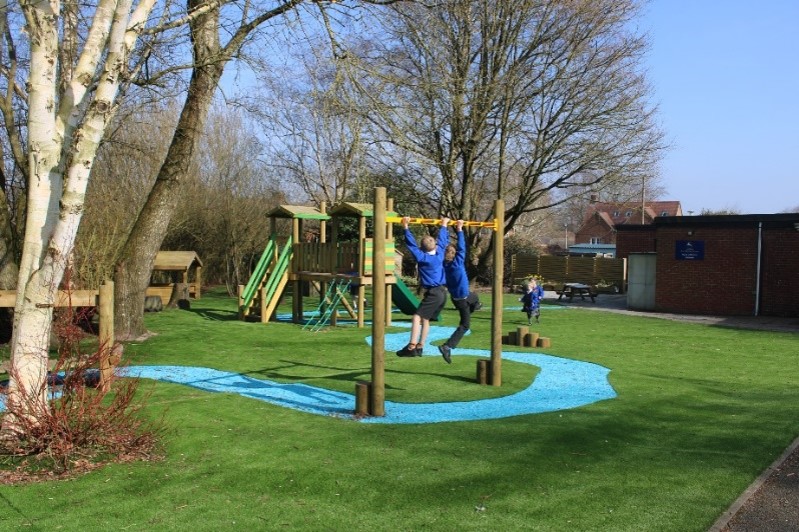
- Monkey bars or overhead equipment
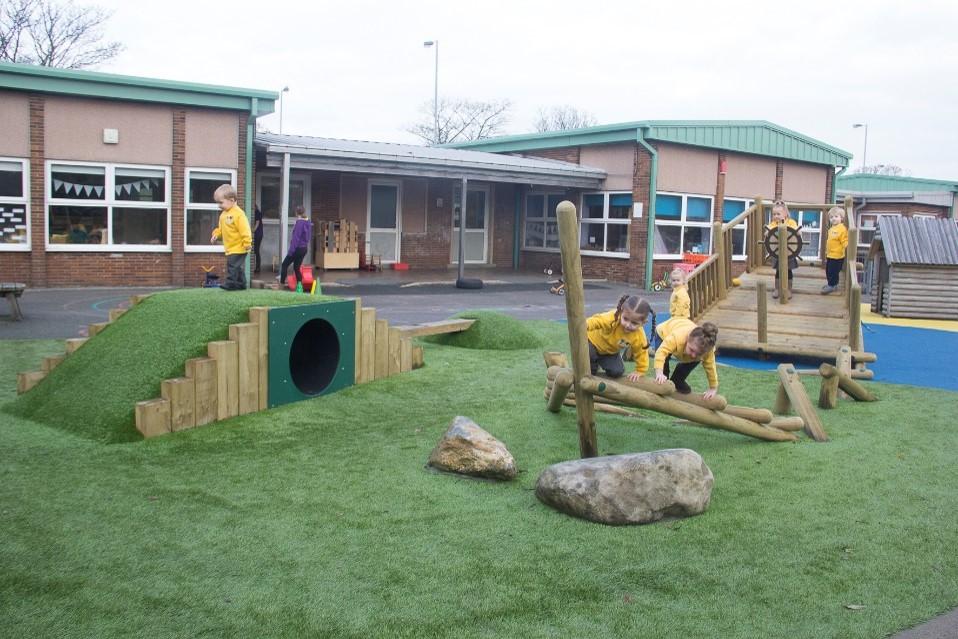
- Adventure trails that encourage children to move between several activities
Try to include a mixture of easier and more challenging elements so that children can build their confidence gradually. Equipment with different heights, surfaces and movement patterns can also help keep the play area interesting for children who use it regularly.

Imaginative and creative play
Role play areas, stages, themed equipment, musical panels and mark-making areas can give children more opportunities to use their imagination and play together. These types of features can support storytelling, communication and creative expression, while also providing a quieter alternative to more energetic physical play.
You could add:
- Playhouses, shops, cafés or outdoor classrooms
- Stages for performances and storytelling
- Mark-making panels
- Musical instruments and interactive sound panels
- Seating or den-building areas for imaginative games
Creative play equipment does not always need to be large or complex. A small role play area; a set of musical panels or a dedicated drawing area can add a completely new dimension to an existing playground.

Social play
Seating areas, group play equipment and collaborative activities can encourage children to interact, communicate and build relationships during playtime. These features can be particularly valuable for children who prefer cooperative games or need a quieter space to spend time with friends.
Consider including:
- Picnic tables and informal seating
- Conversation areas
- Group swings or roundabouts
- Interactive games and activity panels
- Outdoor tables for construction, drawing or shared activities
- Sheltered spaces for small-group play
When planning social areas, think about how children will move between them and the rest of the playground. Positioning seating where staff can supervise easily can also help create a welcoming and well-used part of the outdoor space.

Inclusive and sensory play
Sensory features and inclusive equipment can help create a playground that provides opportunities for a wider range of children and abilities. Different textures, sounds, colours and movement experiences can make the playground more engaging, while ground-level activities can help children participate without needing to access raised equipment.
Possible additions can include:
- Sensory panels and tactile features
- Musical equipment
- Mirrors and visual activity panels
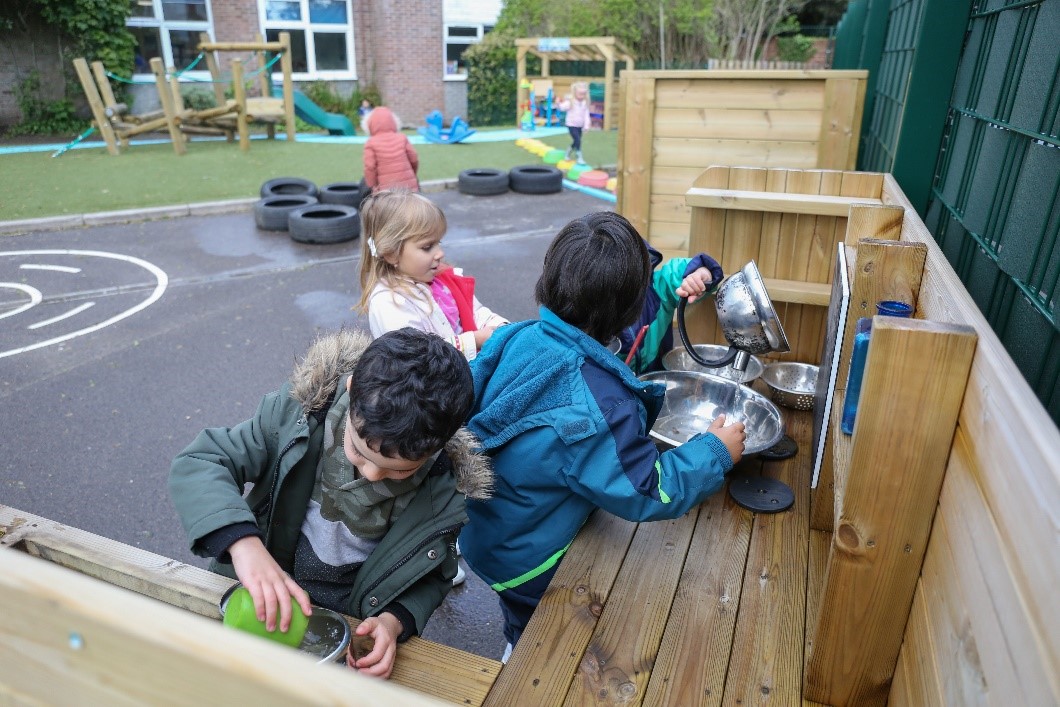
- Sand and water play
- Accessible playhouses or ground-level activities
- Wide, clear routes with smooth surfacing or sensory pathways between play areas
- Quiet spaces for children who need a break from busy play
It is important to consider inclusion across the whole playground rather than treating it as a separate feature. A combination of accessible routes, varied equipment and different types of play can make the space more comfortable and enjoyable for a wider range of children.
By adding something different to your existing playground, you can increase the overall play value of the space rather than simply filling it with more of the same. A balanced mix of physical, creative, social and sensory activities can help ensure that children with different interests, ages and abilities all have something engaging to do.
You can also explore our blog How to Create an Inclusive Playground for further inspiration.

Choose equipment that works with what you already have
When upgrading an existing playground, the new equipment should complement rather than compete with any equipment you are keeping. Think about how children will move between different areas and whether the new addition creates a natural flow through the playground.
It is also worth considering the appearance and style of the equipment. If your existing playground has a natural, timber-based design, for example, continuing with timber equipment can help the new addition feel like part of the original space.
That does not mean everything has to match exactly. Adding a contrasting feature, colour or play experience can help create distinct zones within the playground.
The most important consideration is that the equipment works together to create a balanced and engaging play environment.
Factor in the available space
Space can be one of the biggest challenges when adding new playground equipment.
If you are installing new equipment without removing anything, you will need to consider how much usable space is available and whether the new addition could make the playground feel overcrowded.
It is not simply a case of finding an empty piece of ground. Depending on the equipment you choose, you may need to consider:
- The overall footprint of the equipment
- Required safety and free fall space
- Access routes around the playground
- Supervision and visibility
- The location of existing equipment
- How children will move around the area
If you are replacing old playground equipment, the new item/s may not necessarily fit into the same space. Different equipment can have different footprints and safety requirements, so it is important to plan the layout carefully.
A professional playground design can help you make the best possible use of the space while ensuring that the new and existing equipment work safely together.

Choose the right playground surfacing
Adding equipment may also mean making changes to your existing surfacing. The right surface will depend on the type of equipment being installed, its free fall height and how the area will be used. It is important to consider the condition of the existing surfacing as well as whether it is suitable for the new equipment.
You may decide to extend your existing surfacing, replace a section or introduce a different type of surface to create a new play zone.
Options can include Wetpour, Duralawn, Durabond, Safer Grass Tiles or Loose Fill Bark.
It is also possible to combine different surfaces across one playground, using each one where it is most appropriate for the equipment and activities in that area.
For a more detailed guide, read our blog on choosing the right playground flooring.
Think about accessibility and inclusion
A playground upgrade is also a good opportunity to consider whether your existing outdoor space provides suitable opportunities for all children.
Adding new equipment does not necessarily mean adding the biggest or most physically challenging feature. A combination of inclusive, sensory, social, creative and physical play opportunities can help create a more balanced environment.
Consider whether your playground offers:
- Equipment that can be accessed by children with different abilities
- Opportunities for quieter or calmer play
- Sensory experiences
- Ground-level play activities
- Social spaces
- Clear and accessible routes around the playground
Making small additions in the right places can sometimes make a significant difference to how inclusive and usable an existing playground feels.

Plan your playground upgrade around your budget
Budget will naturally play a major role in deciding what equipment you can add. However, upgrading an existing playground does not have to happen all at once.
Many schools and organisations choose to improve their outdoor spaces in phases. For example, you may start by replacing equipment that is no longer suitable, before adding new play features or improving surfacing at a later stage.
Creating a longer-term plan can help you prioritise what needs to be done now and what could be added in the future.
When setting your budget, remember to consider more than just the cost of the equipment. You may also need to factor in:
- Installation
- Surfacing
- Groundworks
- Removal of old equipment
- Repairs or improvements to surrounding areas
- Future maintenance
A clear plan can help ensure that each new addition contributes towards your longer-term vision for the playground.
When should you replace rather than add equipment?
In some cases, adding new equipment alongside old equipment may not be the best option.
If existing equipment is extensively damaged, no longer suitable for the children or requires frequent and costly repairs, replacement may provide better long-term value.
It may also make sense to consider a larger playground refurbishment if:
- Much of the equipment is reaching the end of its lifespan
- The layout no longer works for the number of children using the space
- The playground lacks suitable opportunities for different ages or abilities
- Surfacing requires significant replacement
- The existing space is becoming difficult to maintain
The best approach will depend on the condition of your current playground, your available budget and what you want the outdoor space to achieve.
Upgrade Your Existing Playground with Fawns
Adding new playground equipment can be a great way to refresh your outdoor space without the cost or disruption of replacing everything.
At Fawns, we can help you assess your existing playground, identify what is worth keeping and explore opportunities for new equipment, surfacing and play areas.
Whether you are looking to add one new feature, replace ageing equipment or create a phased plan for a larger playground refurbishment, our team can help you make the most of your available space and budget.
If you are considering adding new playground equipment or upgrading an existing playground, get in touch with our team to discuss your ideas and arrange a playground consultation.
What to Read Next…
Playground Maintenance Checklist: What Should You Check?
How to Choose the Right Playground Flooring for Your Outdoor Space
Who are Fawns?
We're the longest-established school playground equipment provider around - we know a thing or two about playground design.
With family-ran roots, schools, MATs, nurseries and parish councils trust us to create outdoor playgrounds with a purpose.


Other Blog Posts




We are the one-stop-solution for outdoor playground equipment for schools and parks across the UK.
Based in Hampshire, we pride ourselves on delivering high-quality, durable and innovative school playgrounds.
Fawns Recreational Services Limited - Company Registration Number: 03863973
Site Links
Contact
- 01252 515 199
- sales@fawns.co.uk
- Beech House, Ancells Business Park, Fleet, Hampshire, GU51 2UN

© Playtime By Fawns | 2026 website developed & maintained by digidoda
This site is protected by reCAPTCHA and the Google Privacy Policy and Terms of Service apply.