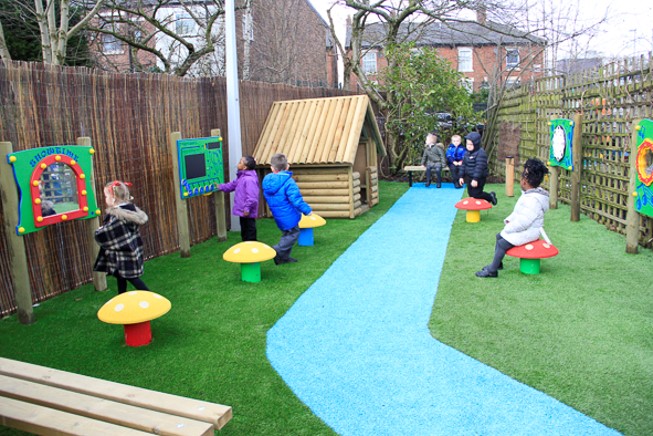
Learn More About...


Who are Fawns?
We're the longest-established school playground equipment provider around - we know a thing or two about playground design.
With family-ran roots, schools, MATs, nurseries and parish councils trust us to create outdoor playgrounds with a purpose.
How to Plan a New School Playground: A Step-by-Step Guide
Planning a new school playground can feel like a big project, particularly when you’re not sure where to start. There is much more to consider than simply choosing the equipment you would like.
From setting a realistic budget and assessing your space to choosing suitable equipment, considering SEND, agreeing surfacing and planning the installation, there are several stages to work through before your new playground is ready
At Playtime by Fawns, we have been designing and manufacturing playgrounds for more than 35 years. Over that time, we have worked with schools across the UK to transform existing playgrounds, develop unused areas and create completely new outdoor spaces.
From our experience, the schools that get the best results are those that take the time to plan the whole project before deciding exactly what equipment they want.
If you are considering a new playground for your school, here is our step-by-step guide to help you understand what to consider and what the process can look like.
Before you start: Define your school playground goals
Before you start looking at playground equipment, think about what you want your new playground to achieve. This is one of the most important questions to answer at the beginning because it will influence almost every decision that follows.
For example, are you looking to create an outdoor space that encourages:
- Physical activity and movement
- Imaginative play
- Creativity
- Social interaction
- Quieter or calmer play
- Outdoor learning
- Sensory exploration
- Independence and confidence
- A mixture of different types of play
You may want your playground to achieve several of these things. The important part is to identify your priorities before you start choosing equipment.
A common mistake is to start by looking through equipment catalogues and selecting the pieces that look most exciting. While this can be a useful part of the process later, it shouldn’t be the starting point.
Instead, before looking at equipment and plans, it is worth asking What do we want children to be able to do in this space?
Once you know this, you can start thinking about the equipment, layout and features that will help you achieve it.
Step 1: Assess the space you have available
Once you’ve decided how the space will be used, the next step is to look carefully at the area available. You may already have a clear area in mind for your new playground, but don’t automatically assume that the only option is to use an existing play area.
Is there an unused or underused part of your school grounds that could be transformed?
An area that is currently overgrown or not being used could potentially become a valuable additional play space with the right planning.
When assessing the area, consider:
- The size and shape of the space
- Existing equipment/surfacing
- Trees and natural features
- Changes in ground levels
- Drainage
- Access points
- Existing fencing
- Security requirements
- Nearby buildings or other school facilities
- How children will enter, leave and move around the space
It is worth considering the area as a whole rather than simply measuring the space available for equipment.
Case study: Making an unused space work for the whole school 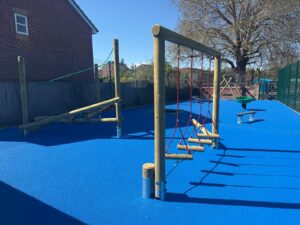
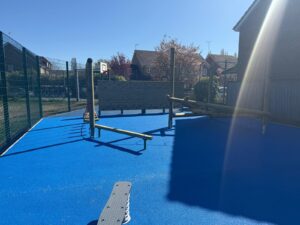
Thameside Primary School in Reading, Berkshire is a good example of what can be achieved by looking at an underused part of a school site differently.
The school had an overgrown and unused area that wasn’t providing any real benefit to the children. Rather than leaving the space unused, the school decided to transform it into a new outdoor area that could be used by children across the whole school.
The school also had higher SEND needs, so the needs and abilities of the children were carefully considered when deciding what equipment and features would be appropriate.
The project demonstrates an important principle when planning a new school playground: don’t just ask what equipment can fit into a space. Ask how the space can work for the children who will use it.
Read the full Thameside Primary School Case Study here.
Step 2: Set a realistic school playground budget
Once you understand the space and what you want to achieve, the next step is establishing a realistic budget.
If your school is fundraising for a new playground, this can be one of the biggest challenges. It can be tempting to set a very ambitious fundraising target, but it is important to consider what is realistically achievable. A new playground project doesn’t necessarily have to be the biggest or most expensive to make a significant difference.
A well-planned budget can help you prioritise the elements that will have the greatest impact for your children.
Remember: it’s not just the equipment
One of the things schools can sometimes overlook when planning a new playground is that the equipment is only one part of the project.
Your overall budget may also need to include:
- Safety surfacing
- Installation
- Groundworks/Ground preparation
- Fencing or security fencing
- Removal of existing equipment
- Removal or preparation of existing surfacing
- Drainage or other site requirements
- Other associated works
These costs need to be considered early in the planning process.
You don’t want to choose your equipment based on your entire available budget, only to discover later that there isn’t enough funding left for the surfacing or installation.
Plan for the complete playground project, not just the equipment.
If you want to understand the different factors that can affect the cost of a school playground, take a look at our guide to How Much Does a School Playground Cost in the UK?
Step 3: Think about who will use the playground
A new school playground needs to be designed around the children who will actually use it. In the planning stage it is worth thinking carefully about the age range of your children.
A primary school may have children from EYFS through to Year 6 using the same outdoor space. The equipment that works well for a four-year-old may not provide enough challenge for an eleven-year-old, while equipment designed for older children may not be suitable for younger children.
Consider:
- The ages of the children using the area
- Different abilities and confidence levels
- The types of play children enjoy
- Whether different year groups will use the playground at different times
- Whether the space needs to accommodate children with SEND
- How many children are likely to use the area at once
If a playground is going to be used by a wide range of ages and abilities, think about whether there are enough different opportunities for play to make the space work for everyone.
Consider SEND from the beginning
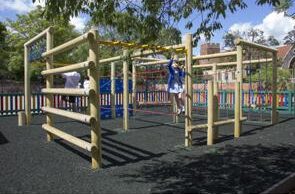
If children with SEND will be using the playground, inclusive design should be considered from the beginning of the planning process.
Rather than asking how to make an existing design accessible afterwards, consider inclusivity when you are deciding how the space will be laid out and which equipment will be included.
For more advice, see our guide to inclusive playground planning.
Step 4: Ask the children what they want
It can be easy for adults to make assumptions about what children want from a playground. But they are the ones who will actually be using the space, so involving them in the planning process can provide really valuable insight.
Ask children what they enjoy doing at playtime and what they think is missing from their current playground.
You could ask:
- What do you enjoy doing at playtime?
- What would you like to have more of?
- Would you like somewhere to climb?
- Would you like somewhere quieter to play?
- What types of imaginative games do you enjoy?
- What would make you want to use the playground more?
- Is there anything you don’t like about the current playground?
Of course, not every suggestion will be practical. Children may have some ambitious ideas about what they would like to see. However, that doesn’t mean their opinions shouldn’t be considered.
The aim isn’t necessarily to give children everything they ask for. It is about understanding what matters to them and using their feedback to help shape the project.
Step 5: Think about movement and how the whole space will work
A playground can contain lots of great equipment and still not work particularly well for the school if the overall layout hasn’t been carefully considered.
Think about how children will move through the space. 
- Where will they enter the play area?
- Where will they naturally walk or run?
- Will there be areas where children gather?
- Are there any spots in the area that aren’t easily visible?
- Will some areas be more active while others are quieter?
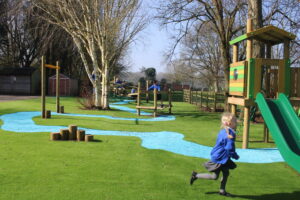
Pathways and surfacing can be particularly useful for helping to guide movement through a playground. It may be worth creating a clear route between different areas or using various surfaces or surfacing colours to help define particular zones.
The positioning of equipment is also important. You don’t want to think about each piece of equipment individually without considering how the children will move between them. You should also consider whether any equipment could block the playground staff’s visibility of the children.
A successful school playground is not simply a collection of equipment. It is a space that works as a whole.
Step 6: Arrange a playground design consultation
Once you have established what you want to achieve, who will use the space and what your budget is, it is time to get professional advice.
At Playtime by Fawns, we start the process by asking some initial questions. This helps us understand the project before moving into the design stage.
We will typically discuss:
- The size of the school
- Available budget
- Whether the school is fundraising and how this is progressing
- The size of the playground area
- The types of equipment the school is interested in
- What the school wants the space to achieve
Following these initial questions, your local Area Sales Manager will typically visit the site to discuss the project in more detail. The visit will also involve measuring the available area, discussing budgets and making recommendations based on the school’s requirements.
This face-to-face conversation is important because it allows the design to be based on the actual space and the school’s needs, rather than simply selecting equipment from a catalogue.
Step 7: Develop and review your playground design
Following the design consultation, a playground design and quotation can be created. This gives the school an opportunity to see how the different elements could work together with a clear design visual and a better understanding of the costs involved.
You may decide that you want to change some equipment, alter the layout or make adjustments to bring the project closer to your budget. This is a normal part of the process.
The important thing is that the design should ultimately reflect:
- The needs of the children
- The available space
- The school’s priorities
- The agreed budget
- The intended types of play
- Inclusive design requirements
Once any amendments have been made and agreed, the final design and quotation can be confirmed.
Step 8: Check the whole project specification
Before everything is signed off, it is worth making sure you understand what is included in the overall project. This is one of the stages that schools can sometimes overlook. A playground quotation needs to be considered as a complete project rather than simply a list of equipment.
Check that you have considered:
Surfacing: Is safety surfacing required, and where will it be installed? The requirements can depend on the equipment, free-fall height and existing surface, so this should be considered during the design stage.
Installation: Has the installation been considered in the budget? Are there any freestanding items that require assembly rather than install?
Groundworks: Does the area need preparation or other groundworks before installation? Have these all been factored into the quotation?
Fencing: Does the playground require new or replacement fencing? Which type of security fencing has been chosen?
Existing equipment: Does anything need to be removed before the new playground can be installed? Have the foundations of the existing equipment been checked? If installing new equipment next to existing equipment, has the minimum fall zone been considered?
Access: Can the installation team access the site and bring the necessary equipment onto the school grounds? Are there any other access points the team can take that would bring them closer to the install site?
These practical details can have a significant effect on the overall project, so it is much better to consider them at the planning stage than to discover them later.
Step 9: Allow enough time for your playground project
One of our biggest pieces of advice for schools is to keep your timeline expectations realistic. A new playground isn’t usually an off-the-shelf purchase that can be ordered and installed within a few weeks. All of Fawns equipment is made to order, so this can add a bit of time to the process.
There is a process involved:
Planning → consultation → design → quotation → amendments → final approval → pre-works meeting → manufacture → installation
For example, if you want your playground to be installed during the summer holidays, the planning process would need to start a few months beforehand. For many schools, starting around January can give you useful breathing room to work through the consultation, fundraising, design, approvals, manufacture and installation before the summer.
Every project is different, so the exact timeline will depend on the size and complexity of the project. The important thing is not to leave your planning until the last minute.
Step 10: Complete a pre-works meeting
Once the playground design and quotation have been agreed, there is still an important stage before installation begins. At Playtime by Fawns, our Contracts Manager will attend the school for a pre-works meeting.
A pre-works meeting is an important part of our process and gives us another opportunity to check the details before work progresses. Our Contracts Manager can confirm measurements, agree details and installation requirements, helping to make sure everyone is working from the same plan before the project moves forward.
School playground planning checklist
Before you begin your new playground project, ask yourself:
- What do we want the playground to achieve?
- Who will use the space?
- What ages and abilities need to be accommodated?
- Have we considered children with SEND?
- How large and suitable is the available space?
- Are there unused areas that could be transformed?
- What is our realistic overall budget?
- Have we included surfacing in the budget?
- Have we considered installation costs?
- Will groundworks be required?
- Do we need new or replacement fencing?
- Have we asked the children what they would like?
- Have we considered how children will move around the space?
- When do we want the playground to be completed?
- Have we allowed enough time for design and manufacture?
Planning a new school playground is a big project, but it becomes much more manageable when you break it down into stages. Most importantly, start with the children and the purpose of the space, rather than starting with the equipment.
A successful playground doesn’t necessarily have the most equipment or the biggest budget. It is a playground that has been carefully planned around the children who will use it and considers how the whole space will work. Think about the different ages and abilities of the children in your school. Consider how they will move around the area. Make sure your budget includes all aspects of the project, not just the equipment. And give yourself enough time to work through the design, quotation, manufacture and installation process.
Ready to start planning your new school playground?
Whether you are transforming an existing playground, making use of an unused part of your school grounds or creating a completely new outdoor space, the first step is understanding what you want to achieve.
At Playtime by Fawns, we can help you work through the process from the initial consultation and site visit through to design, quotation, pre-works planning and installation.
If you’re considering a new school playground, get in touch with our team to discuss your space, budget and ideas.
What to read next…
Adding New Playground Equipment
Who are Fawns?
We're the longest-established school playground equipment provider around - we know a thing or two about playground design.
With family-ran roots, schools, MATs, nurseries and parish councils trust us to create outdoor playgrounds with a purpose.


Other Blog Posts



We are the one-stop-solution for outdoor playground equipment for schools and parks across the UK.
Based in Hampshire, we pride ourselves on delivering high-quality, durable and innovative school playgrounds.
Fawns Recreational Services Limited - Company Registration Number: 03863973
Site Links
Contact
- 01252 515 199
- sales@fawns.co.uk
- Beech House, Ancells Business Park, Fleet, Hampshire, GU51 2UN

© Playtime By Fawns | 2026 website developed & maintained by digidoda
This site is protected by reCAPTCHA and the Google Privacy Policy and Terms of Service apply.